


The Iran conflict is a game played by giants; we (oil traders) are nothing but ants stuck in a field full of giants.
The goliath in this case is the US and China. From the start, my analysis of the Iran conflict was that the longer the conflict lasts, the lower the probability of a smooth resolution. Despite signing the MOU nearly 2 weeks ago, Strait of Hormuz traffic remains at a trickle compared with pre-conflict levels, and oil production shut-in in the Middle East continues at ~6 million b/d, excluding Iran.
But the world has found itself in an interesting predicament. It is currently short of products and has a surplus of crude.
So before we get started with the main topic today, let’s do a quick recap of the oil math.
Oil Math
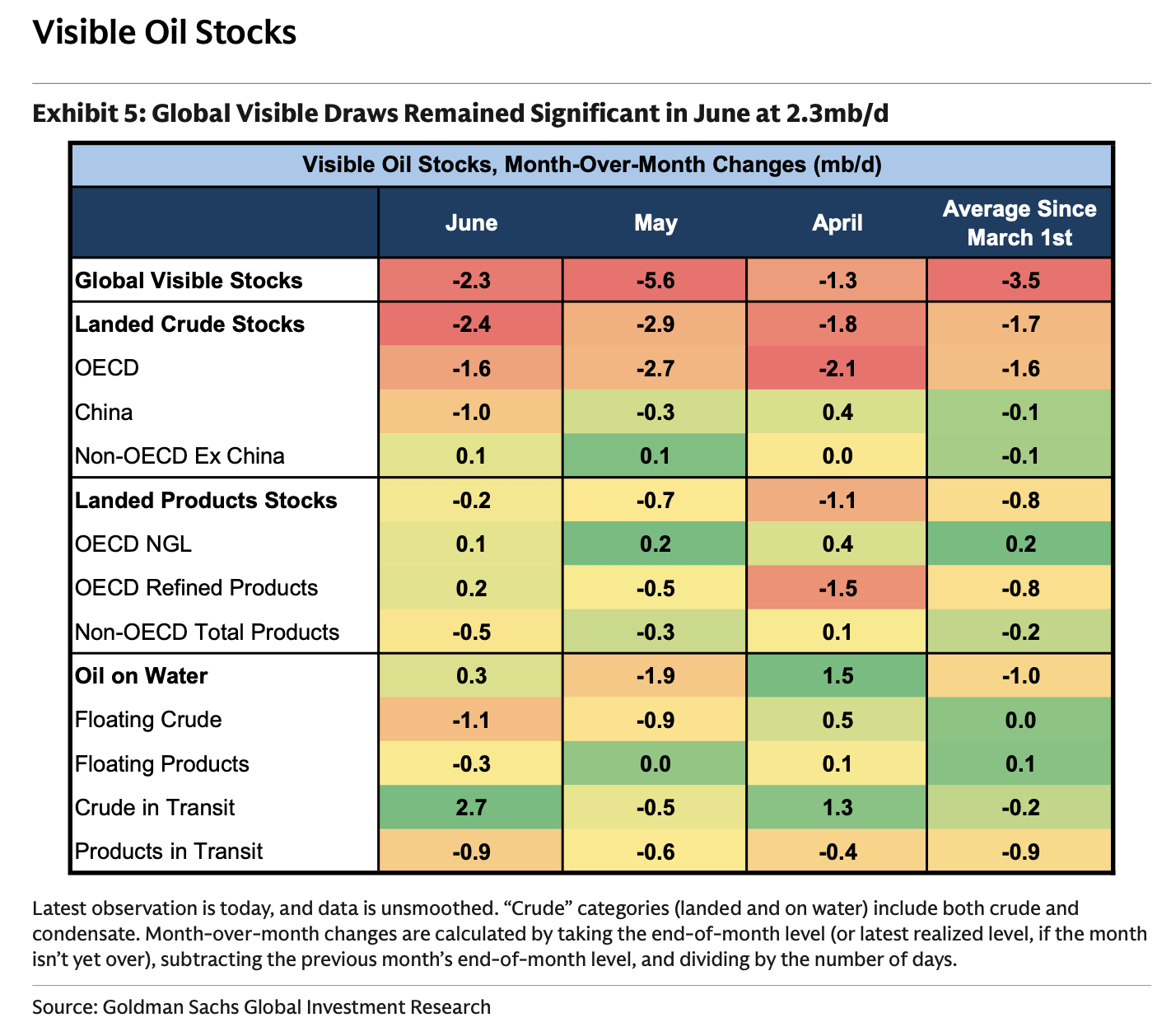
Goldman’s latest update on June 29 did a good job of recapping some of the recent updates:
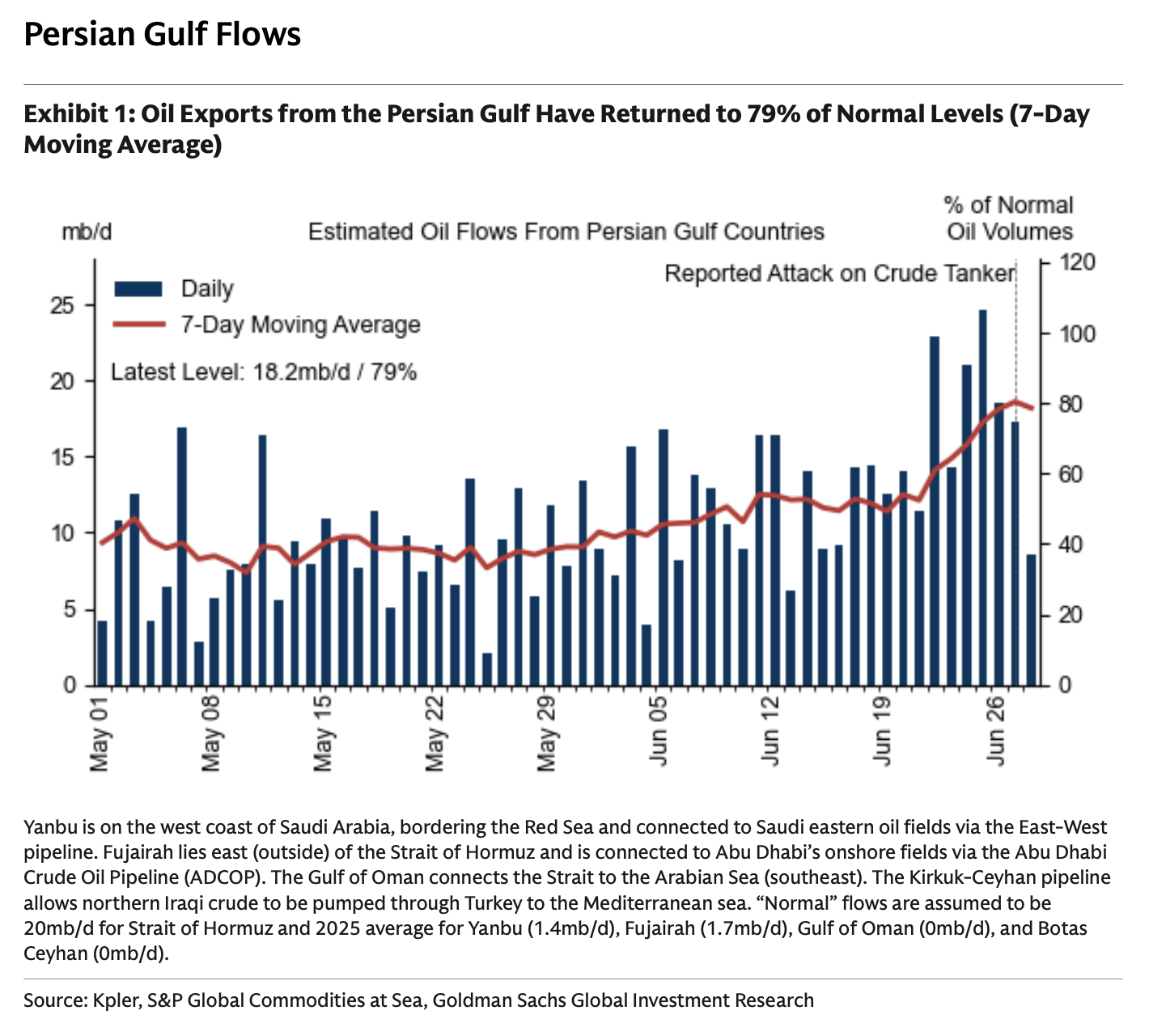
The first chart is the Persian Gulf flow, including bypasses from both Fujairah and the East-West pipeline. Relative to pre-conflict flow, this almost returned to normal until Kiku, the VLCC, was attacked.
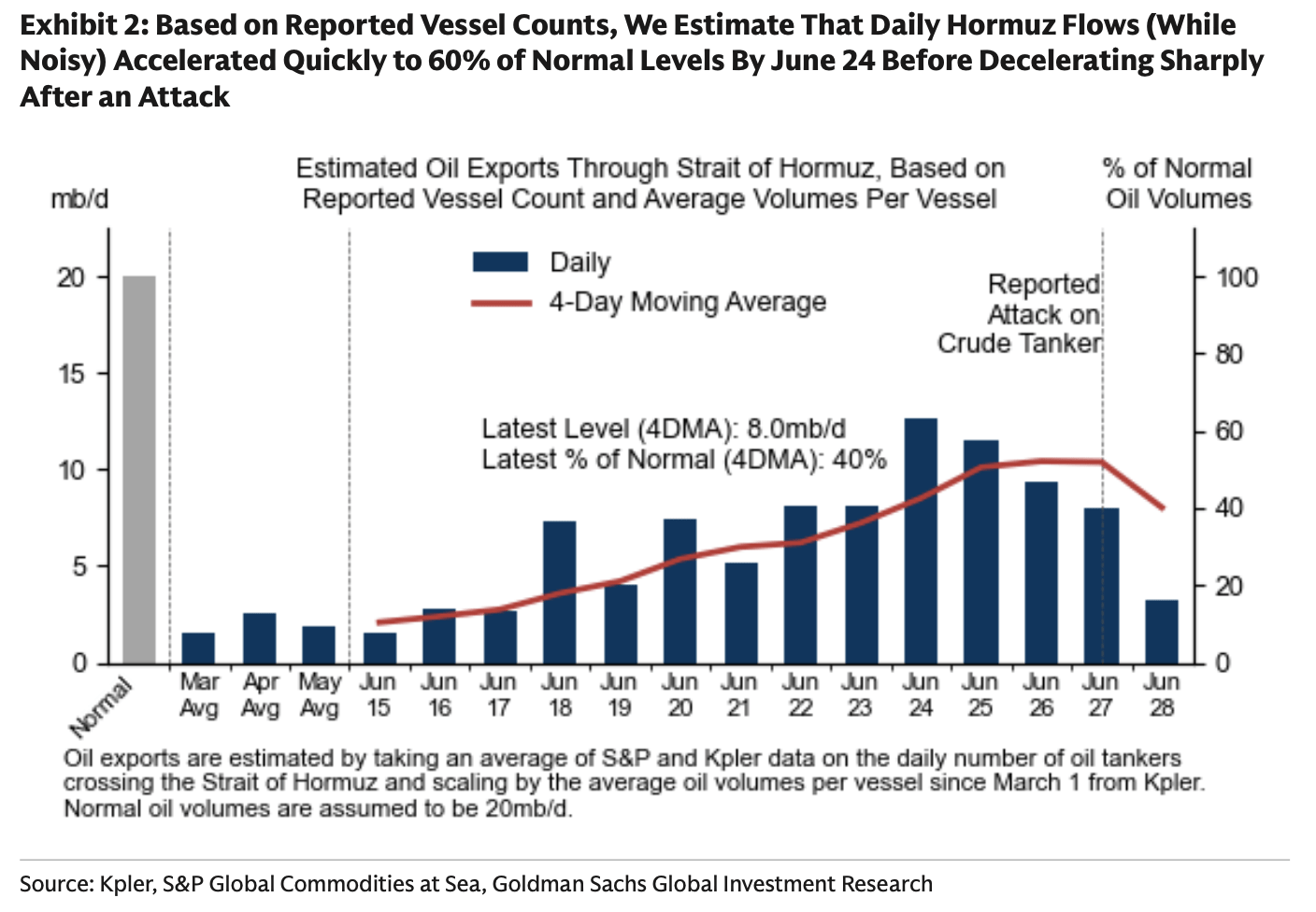
Excluding the bypasses, you can see that the flows were nearly normalized, thanks largely to stranded tankers exiting before stalling again.
This can also be viewed from Windward AI, which shows a jump in traffic before falling.
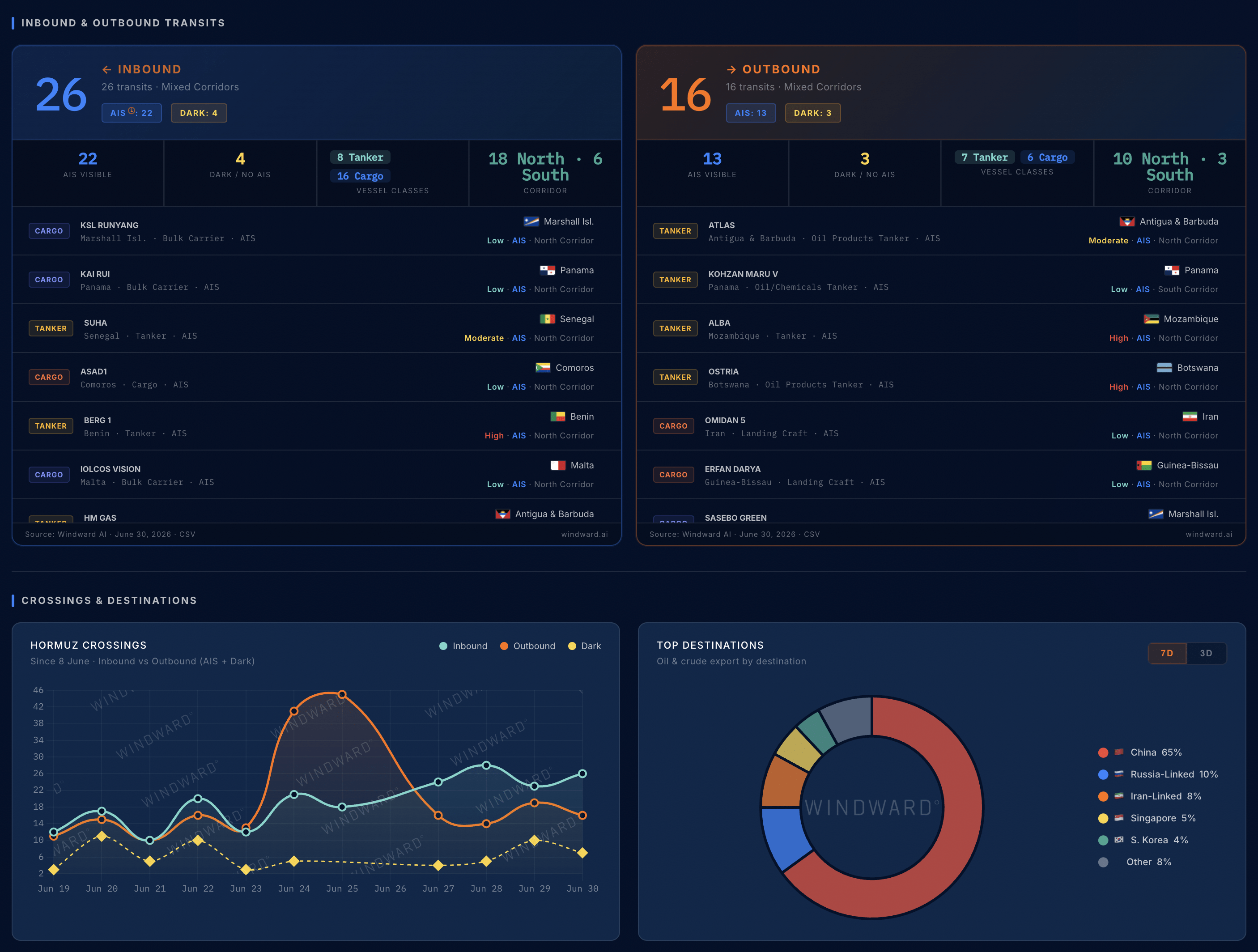
Source: Windward AI
On the inbound tanker side, we have kept a tally of all visible AIS tankers entering.
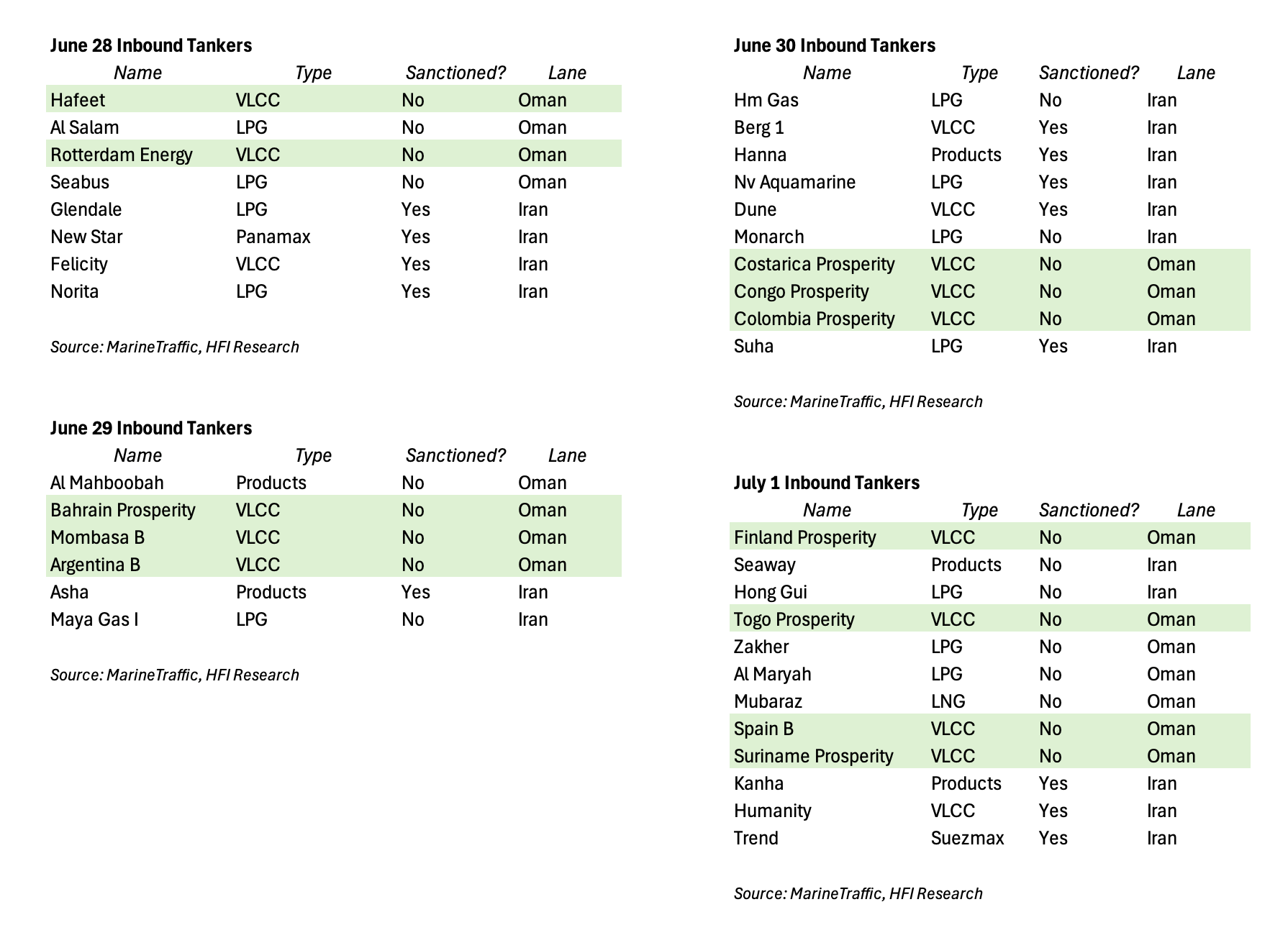
What should be clear from the list of tankers is that, following the IRGC attack on Kiku, most tankers have only traversed the Oman route under US escorts. Excluding dark transits, we have averaged ~3 VLCCs per day. Including dark transits, we are perhaps closer to 5.
To further break this variable down, the current estimate for the last 7 days of inbound tankers has averaged 6.3 million b/d.
Iran - 2 million b/d
UAE - 1.4 million b/d
Saudi - 1.4 million b/d
Iraq - 1.1 million b/d
Kuwait - 0.3 million b/d
Now, in relation to the oil production shut-in math, if these variables were to continue, this is what the production shut-in would look like:
Iran - assuming normal
UAE - assuming normal
Saudi - 2 to 2.5 million b/d shut-in
Iraq - 2.2 million b/d shut-in
Kuwait - 0.65 million b/d shut-in
Bahrain - 0.17 million b/d shut-in
Qatar - 1.1 million b/d shut-in
Total: 6.12 to 6.62 million b/d
In historical terms, if this were a normal oil market, it would still be the largest oil production outage in the market’s history. But this is far from a normal market, and this brings me to the point of this article: we are but ants in a field full of giants.
China, single-handedly, eliminated the entire crude oil deficit by reducing imports.