

By: Wilson
I might need to be admitted to the insane asylum soon. I went through 6 sell-side reports today, all assuming some type of return to normality within 60 days. Goldman is assuming the end of July; Morgan is assuming the end of August; HSBC is assuming sometime in August; JPM is assuming sometime in Q3; and so on.
Perhaps I’ve been reading too many OSINT accounts or following the tanker vessel counts a bit too closely. But can someone please help me understand how we are going back to normal anytime soon?
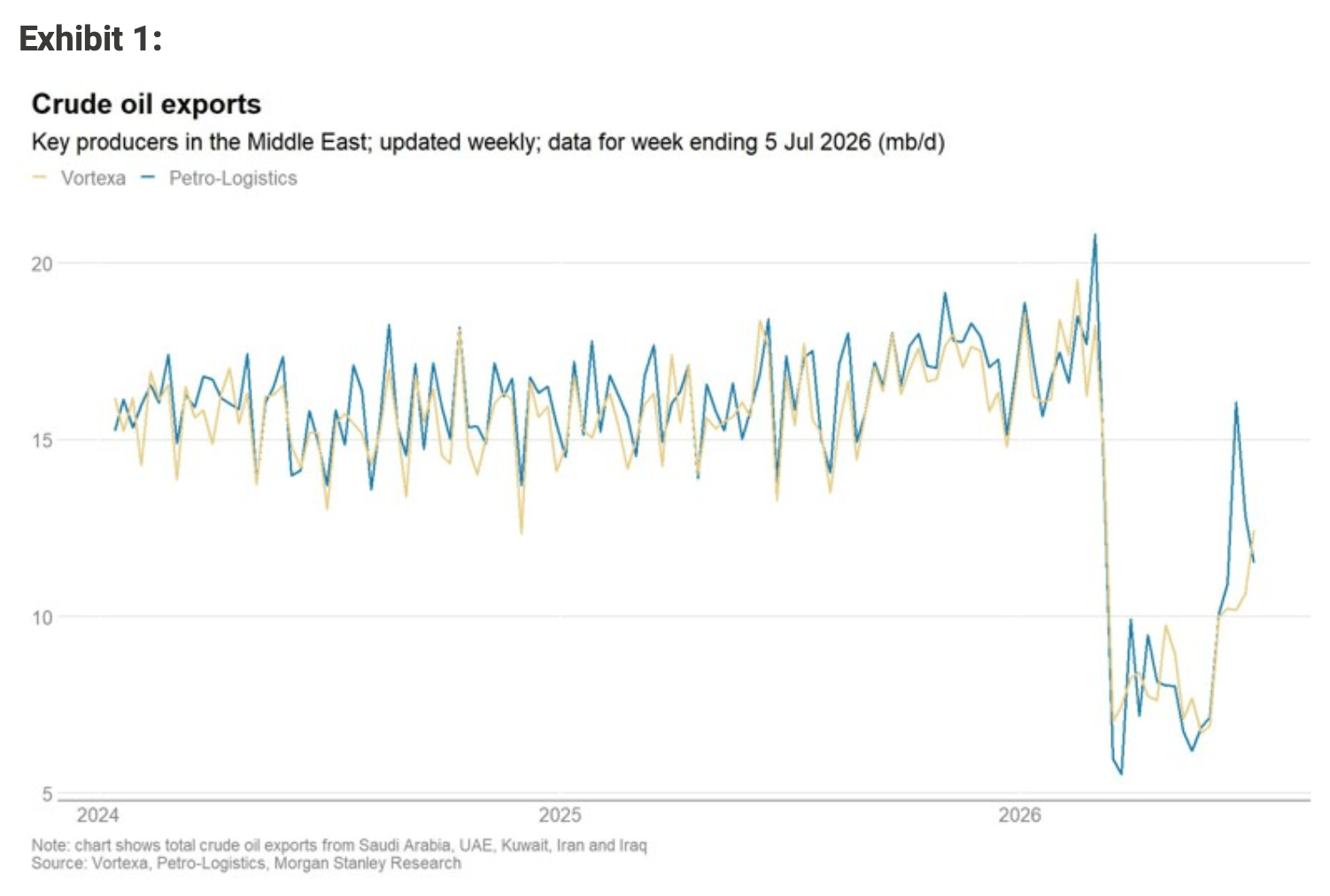
Here are some charts from Morgan Stanley:
Crude Oil Exports
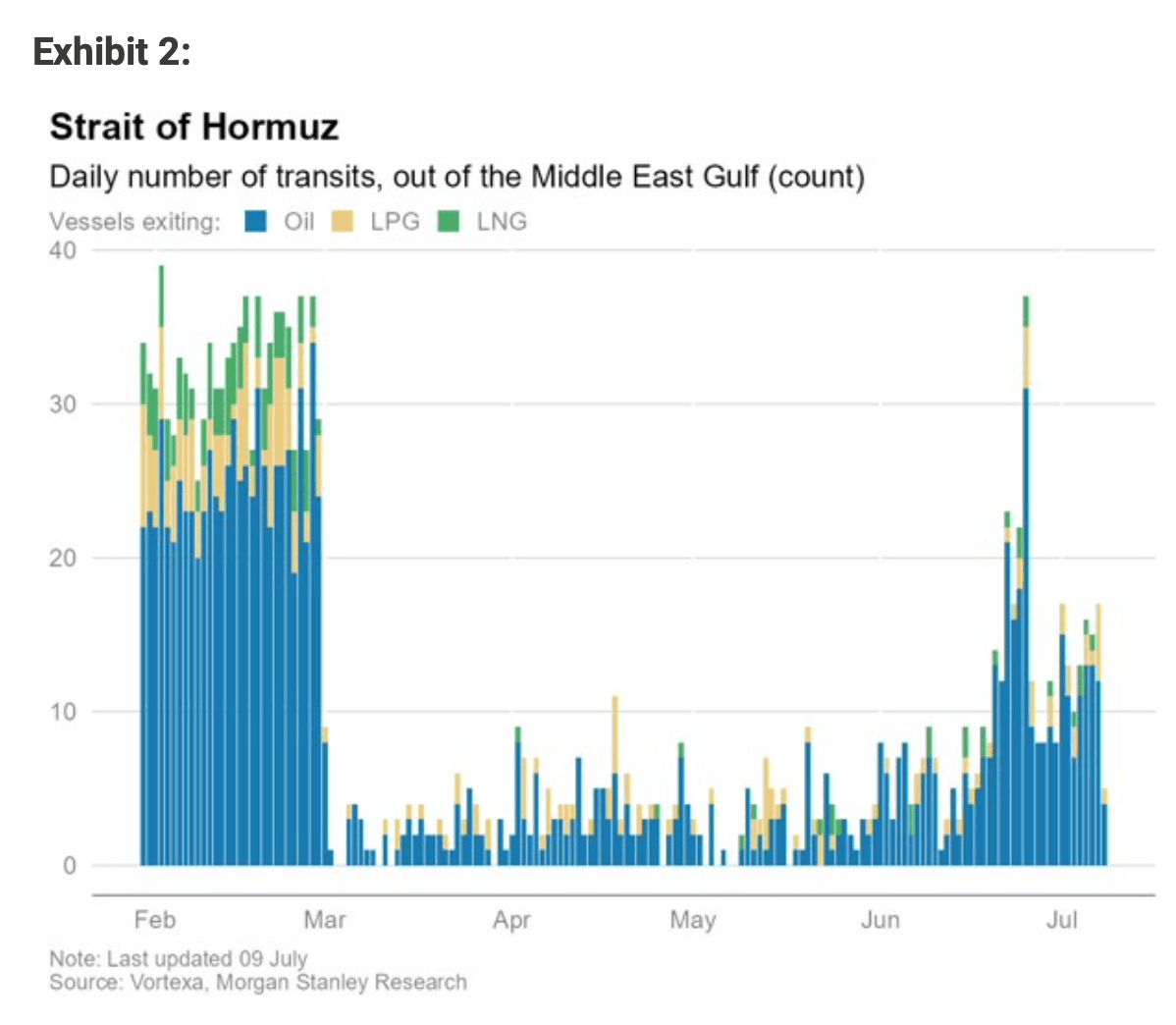
Transits out of MEG
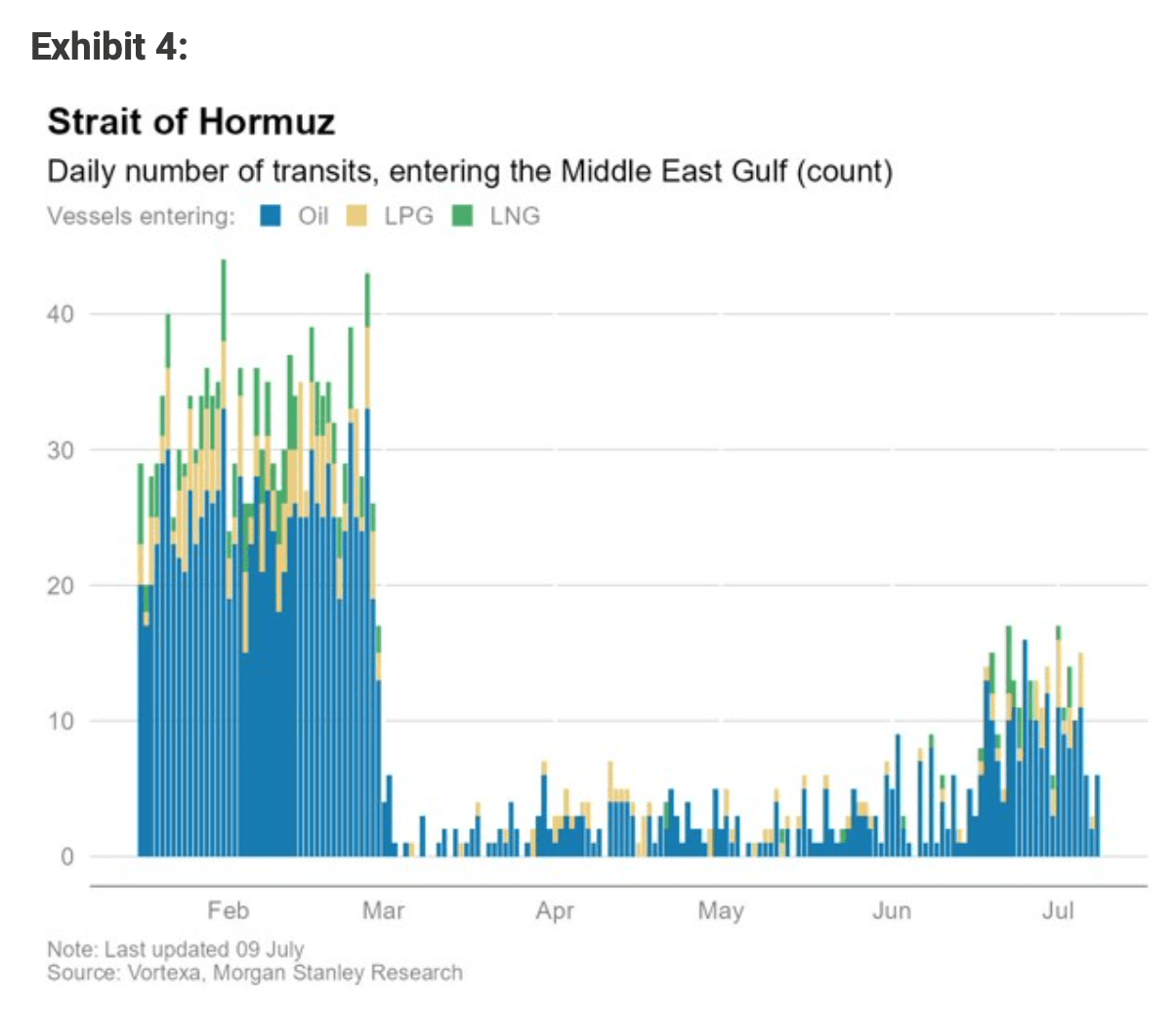
Transits into MEG
And here are some charts from Goldman:
Flows out of SOH
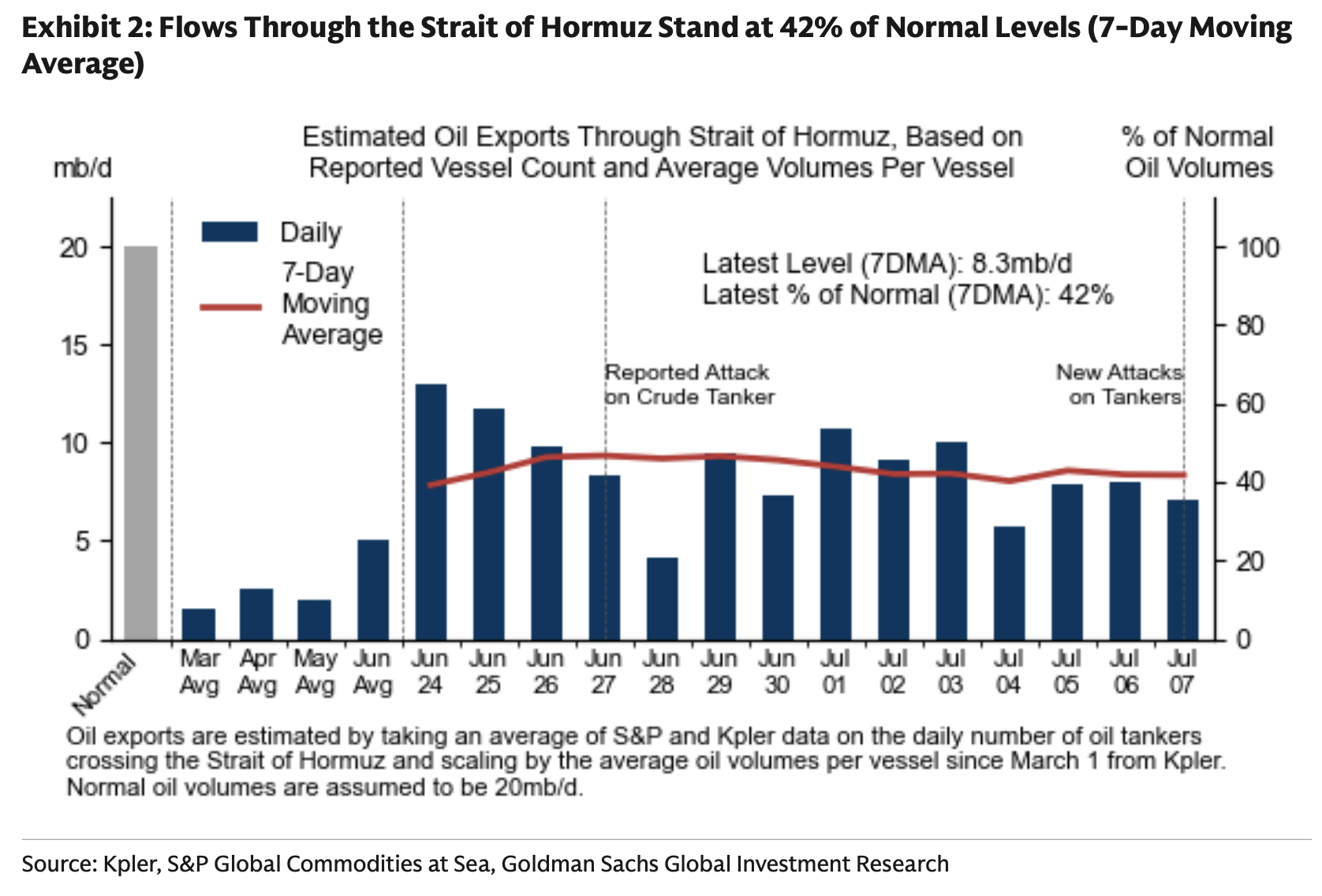
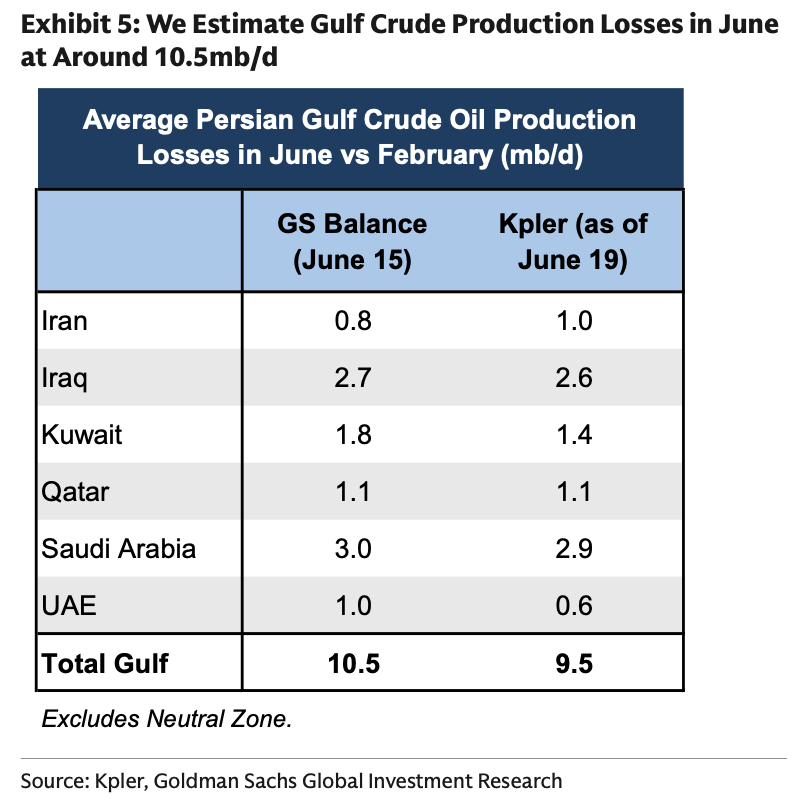
Production shut-in
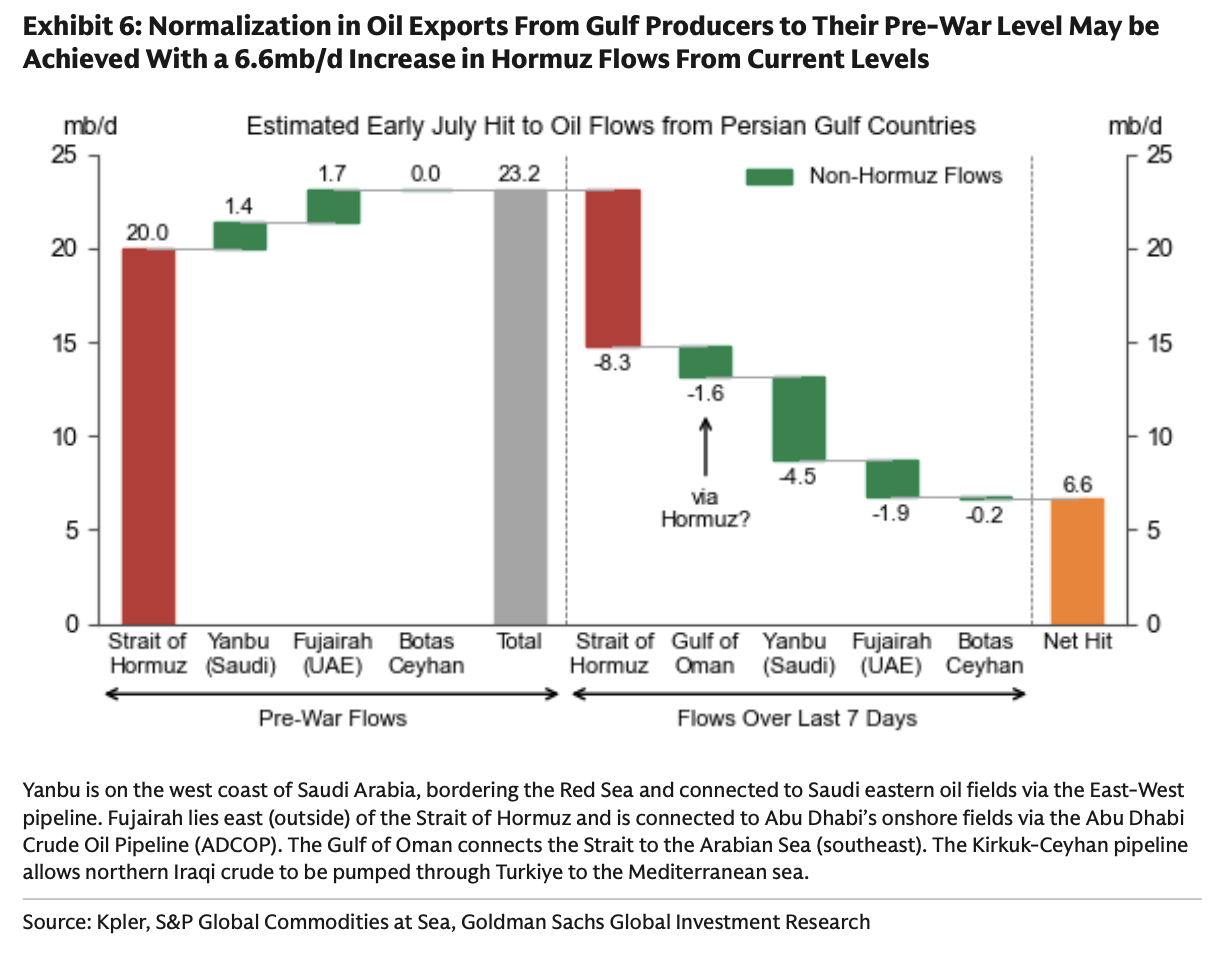
Imbalance
So let me understand this correctly. Since June 17, we have released the floating storage that had been stuck due to the closure of the Strait of Hormuz.
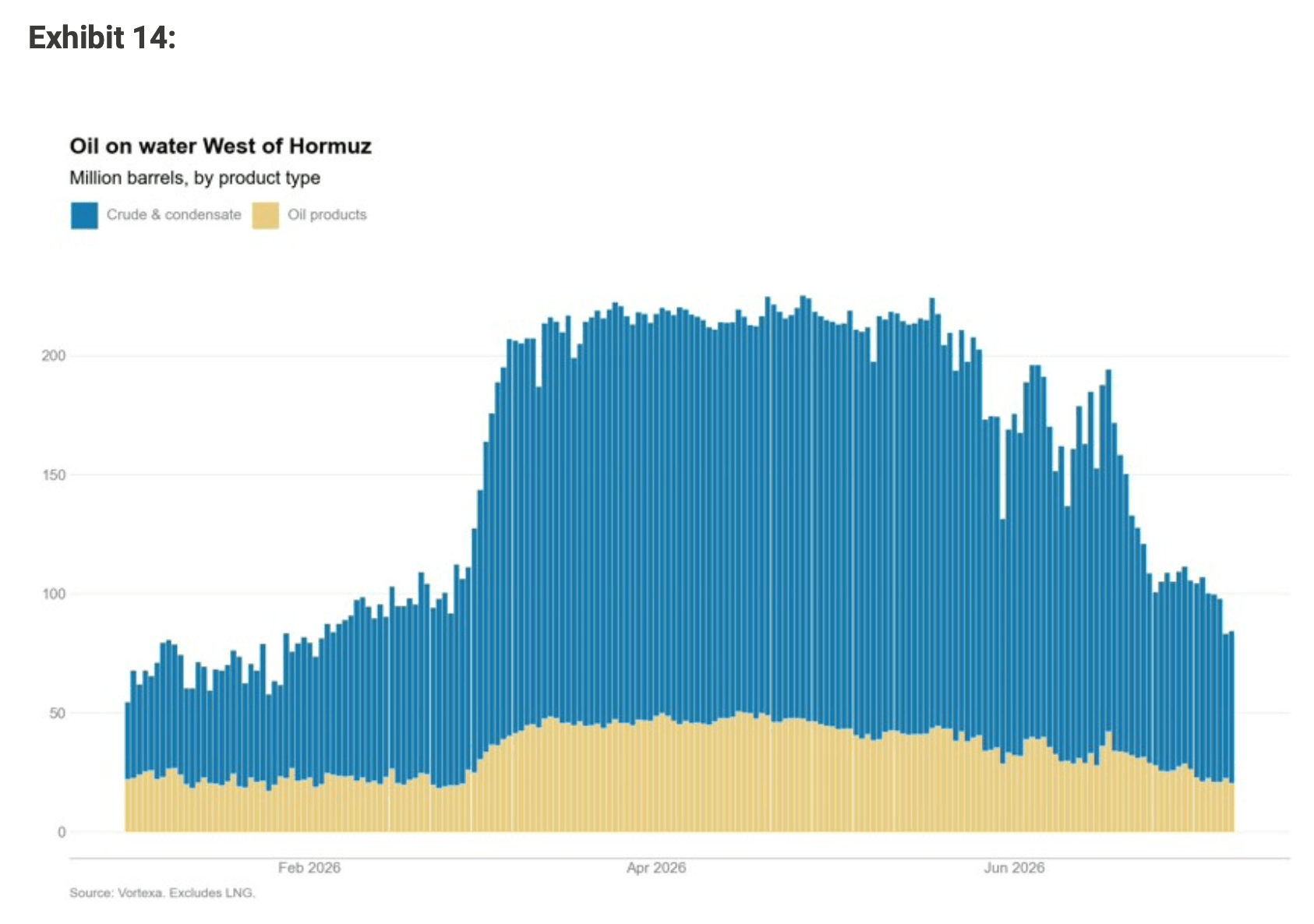
Energy Aspects estimated that ~150 million bbls exited since June 17, which equates to ~8 million b/d. Most of that is due to the stranded barrels leaving, which still leaves production shut-in (optimistically) at ~6 million b/d.
Even Goldman’s own analysis assumes there’s still a ~6.6 million b/d flow difference despite the recent pickup. But the oil market is in a glut because of ~150 million bbls exiting?
What?
Every sell-side analysis I’ve read so far rhymes with something along the lines of this:
We estimate the Strait of Hormuz flow to normalize by ___. We project that the global oil market will be in a steep surplus going into 2027, which should help build global oil inventory buffers. We expect UAE to increase production higher than previous years because it has exited OPEC and will ramp production. Non-OPEC supplies have also increased versus pre-war expectations, and we expect some type of structural demand destruction that came from this conflict.
I must be insane. I just can’t believe the analysis I’m reading these days. Either I am the dumbest human being on the planet, which I am open to admitting at any time, or everyone has completely lost their minds.
There is no evidence happening in the Strait of Hormuz that leads me to believe that any semblance of normality is coming anytime soon. The US and Iran are actively bombing each other, the US is forced to escort ships through the Oman lane with AIS turned off, and sell-side analysts are assuming normality to return by the end of the month.
This is not an analysis anymore. This is wishful thinking.
In COVID, I remember sitting in my office in April and reading about how:
Oil inventories are going to hit tanktop everywhere. Tanker rates are going to skyrocket due to floating storage demand.
Permanent demand destruction is coming. Global oil demand will never surpass 2019 levels again.
Oil markets will take years to recover from the inventory build-up, and we may not see $50 to $60/bbl crude for at least 3-5 years.
And as I was reading through these reports, I was simultaneously attending board meetings for Gear Energy about how we needed to drastically shut-in production because crude oil was trading below our operating breakeven. Where was the analysis about the production shut-in? Where was that analysis?
I remember thinking in 2020, I must be insane. There is no way the investment community doesn’t realize that when oil falls below operating cost per barrel, producers are forced to shut-in production. This is an inevitable outcome for producers worldwide. Even if OPEC+ producers didn’t want to shut-in barrels, they had no choice. Prices are too low, so production cuts were an inevitable outcome.
And a month later, production shut-in was all anyone talked about. I just sat there in complete disbelief. Something that was so insanely obvious was overlooked by the whole market.
Well, this time isn’t any different...
As an energy specialist, it is impossible to make a prediction about the future if I don’t know who ultimately controls the Strait of Hormuz. Anyone making predictions beyond Q3 is fooling themselves. The fact that we still have this volatile of a geopolitical landscape all but guarantees that any forecast will be wrong.
How are people so confident that everything will be back to normal so soon? Iran wants control of the Strait of Hormuz as a permanent deterrent. The US and Gulf allies cannot give Iran control of the Strait because it would make it the most powerful oil producer in the world.
This is not difficult to understand. It is not rocket science. Either Iran gets control, or it doesn’t. But assuming everything will be normal is pure insanity. And the fact that the investment community has piled on the short side just makes it even more asinine.
Long-time readers will know that I have no issue admitting that I’ve made a mistake and learning from it. But this is something I simply do not comprehend. We have not resolved a core issue that continues to plague the oil market. Production shut-in persists and with the Oman lane being heavily contested now, inbound tanker flows will be restricted again, which all but guarantees a slower production restart timeline. And the longer the conflict drags on, the more the barrels stay shut-in, and the more onshore inventories have to drop.
Sure, global oil inventories got a temporary boost from floating storage that’s being released, but it’s a blip.
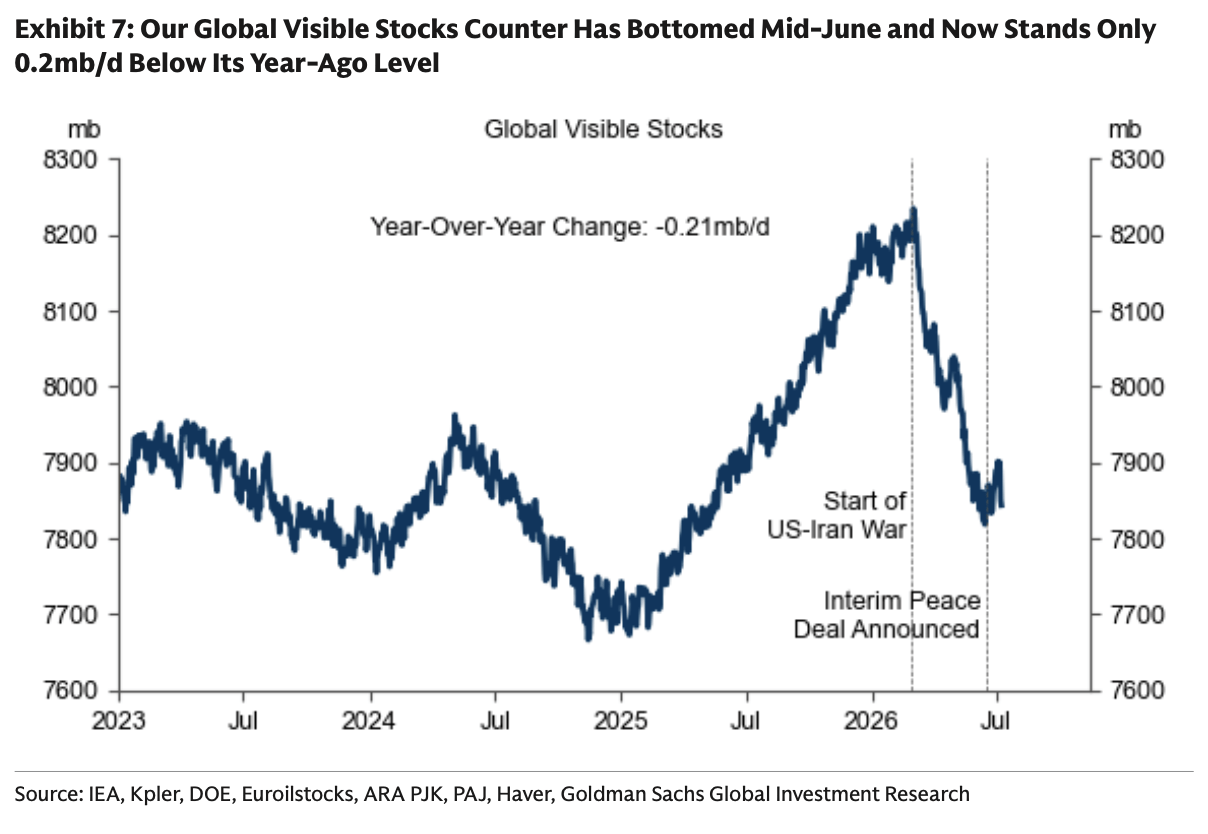
This issue will persist so long as the core issue remains. And if the conflict for the Strait continues, then the production shut-in math will get worse, which will all but guarantee more inventory draws.
Now that China is back and has lifted the export ban on products, we will see just how quickly those floating storage barrels are absorbed. With elevated refining margins, China is the only place with excess refining capacity, and I fully expect it to be utilized.
We will see just how much longer the market buys into the narrative that things will soon return to normal.
Insane Asylum
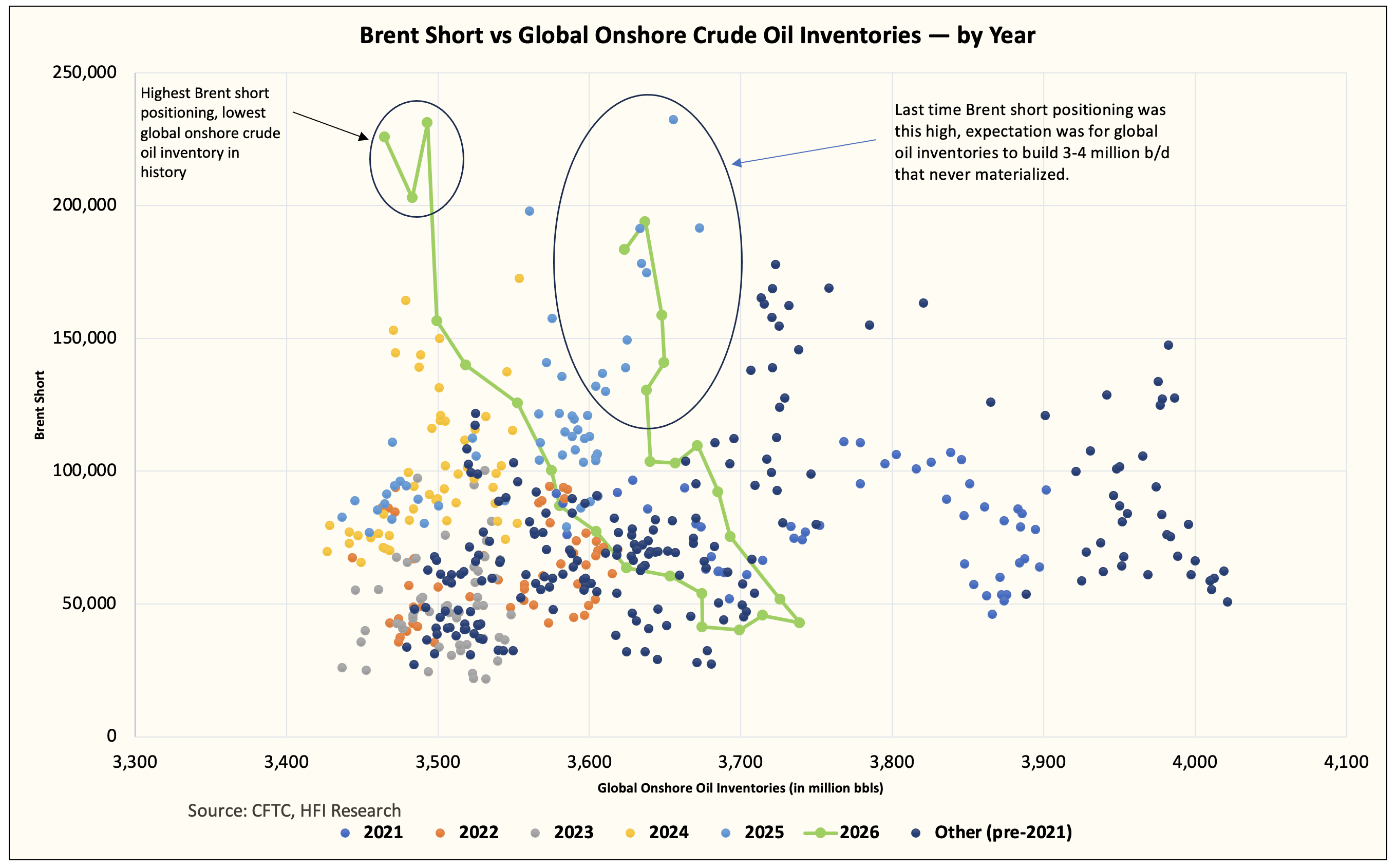
I know I’m not a normal person, but I know I’m not crazy. What we are witnessing in the oil market today is history in the making. We have never had Brent short positioning this high and global crude oil inventories this low.
Now if you put this into a net long Brent perspective, you get this chart below:
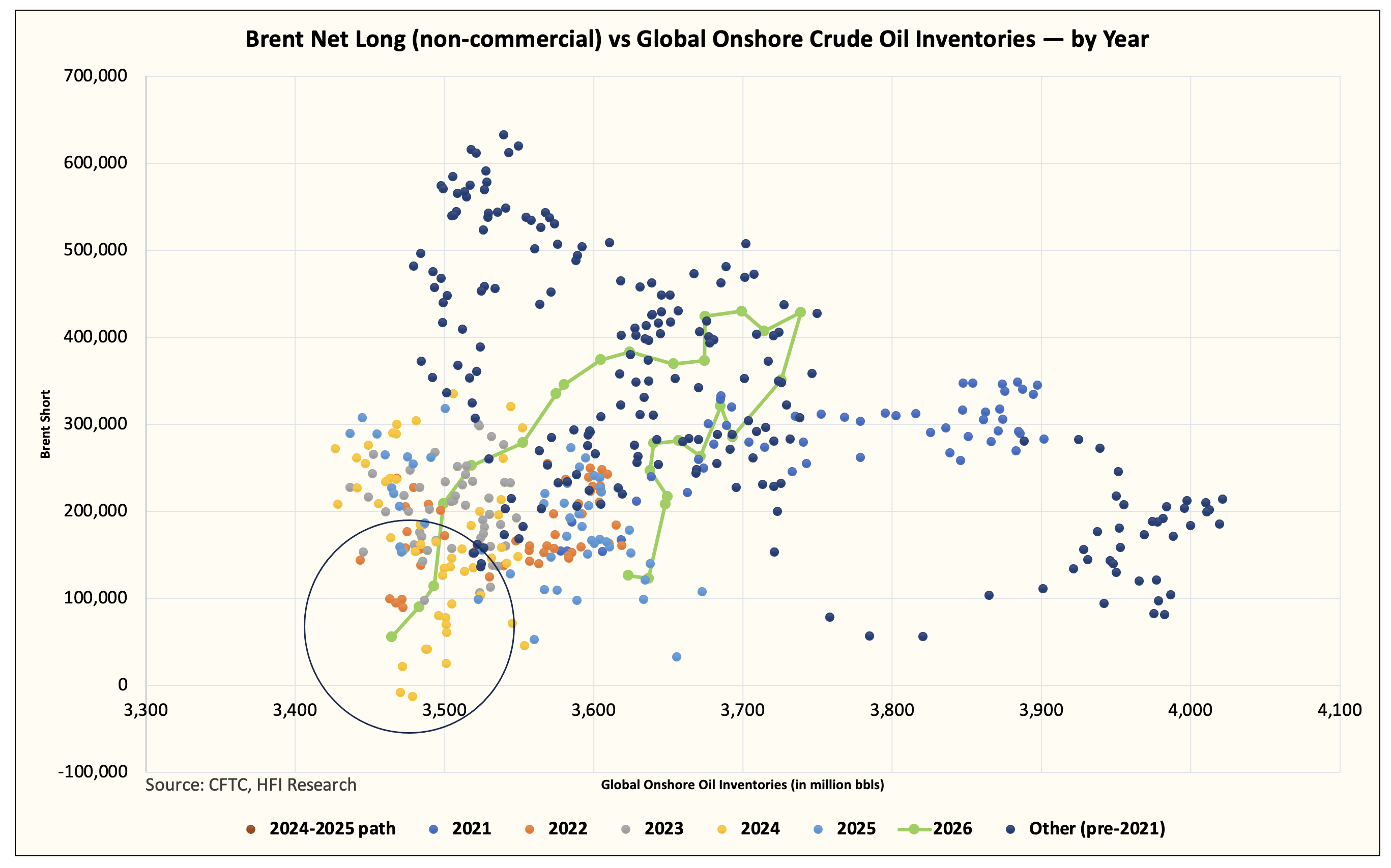
In essence, the oil market is saying exactly what sell-side analysts are saying. Normality is here, the Strait of Hormuz is back to normal, and the oil market is about to see a record surplus.
The only other time Brent net long positioning was this bearish and global onshore crude oil inventories were this low was back at the end of 2024. The market expectation was that 2025 would see builds.
And in fairness, the market was right. We had OPEC+ announce a truncated production increase on the same day that Trump announced the tariff Liberation Day. So global oil inventories built up, mostly in China buying for the SPR, and the sentiment was right.
But there’s a lot more at stake this time around. At the end of 2024, the oil market was normal. There was no active conflict. We didn’t have missiles flying back and forth and tankers getting hit. We also didn’t have the swing buyer (China) reduce crude imports by 50%, only to start buying again when the floating storage barrels came out. And we didn’t have ~6+ million b/d of production shut-in, the largest supply outage in history.
All the while, global oil inventories are low and going lower. If the production shut-in doesn’t come back anytime soon, those draws will continue. That’s the reality.
So whether I’m insane or not, only time will tell. Perhaps we can all look back on this and laugh at how crazy 2026 was. I just hope we can do it with a fatter bank account.
Analyst’s Disclosure: I/we have a beneficial long position in the shares of USO, UCO, BNO either through stock ownership, options, or other derivatives.
All the psychosis and delusions will only be jolted into reality when the U.S. Navy loses a destroyer from Iran drones and missiles. It is inevitable, IMO
Less, almost unreported, is the Russia/Ukraine war of energy. There is considerable damage being done to the "Shadow Fleet" used to bypass G7 price caps and international sanctions. Dozens of tankers and transport vessels have been struck in the Black Sea, the Sea of Azov, and even the Mediterranean. Currently, about 35% of the Russian population faces fuel restrictions. Stations have experienced multi-hour or multi-day lines, and Crimea declared a state of emergency, capping individual fuel sales. Moscow banned all diesel exports through late July 2026 and enacted an aviation fuel export ban through November. Russia, traditionally a massive exporter, has been forced to begin importing refined products from Asia. So there is a material effect on Russia's joule production and import/export markets.