

Editor’s Note: This article was first published to paid subscribers on October 6th.
On Sept 28, I wrote an article titled, “The Oman Lane Flow Is Giving The Oil Market A False Sense Of Stability.” Market participants began pointing out that Oman Lane flow was reaching “pre-war” levels. Instead of asking why oil prices remained so elevated or why the physical market remained in distress, most market participants attributed elevated oil prices to persistent tanker-attack risks.
That was the wrong read.
To add salt to the wound, I think the worst market take so far this year is that Iran is losing control because transit flows increased. Never mind the fact that China intervened to allow the Saudis to export more barrels from the East, but this diplomatic intervention somehow translating into a loss of control by Iran is beyond me.
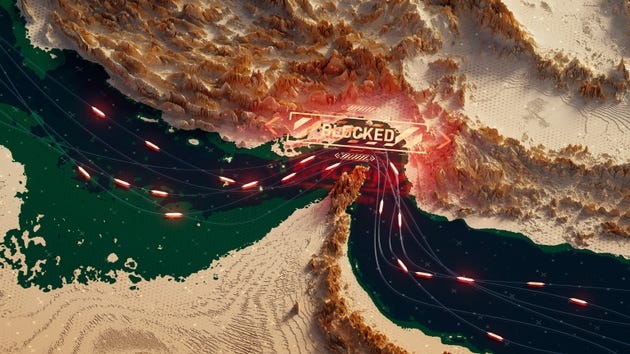
What’s clear from the geopolitical developments over the past week is that control is being “reasserted” in the Strait of Hormuz. OSINT accounts point to a significant increase in tanker attacks. In fact, UKMTO reported that since the beginning of October, 10 tankers have been attacked.
More importantly, if you pay attention to the tanker market, old VLCCs have seen a material price increase. Why? Countries like the UAE are buying old tankers and hoping to use them for the shuttle runs. In the event of an attack, cheaper and older tankers can be discarded, while the new ones will be reserved for longer hauls.
But what’s clear from this phenomenon is that it’s unsustainable. Iran is escalating the tanker attacks, which will bleed the available fleet dry. Based on preliminary Kpler data and loading, it is clear to me that we’ve already seen peak Hormuz.
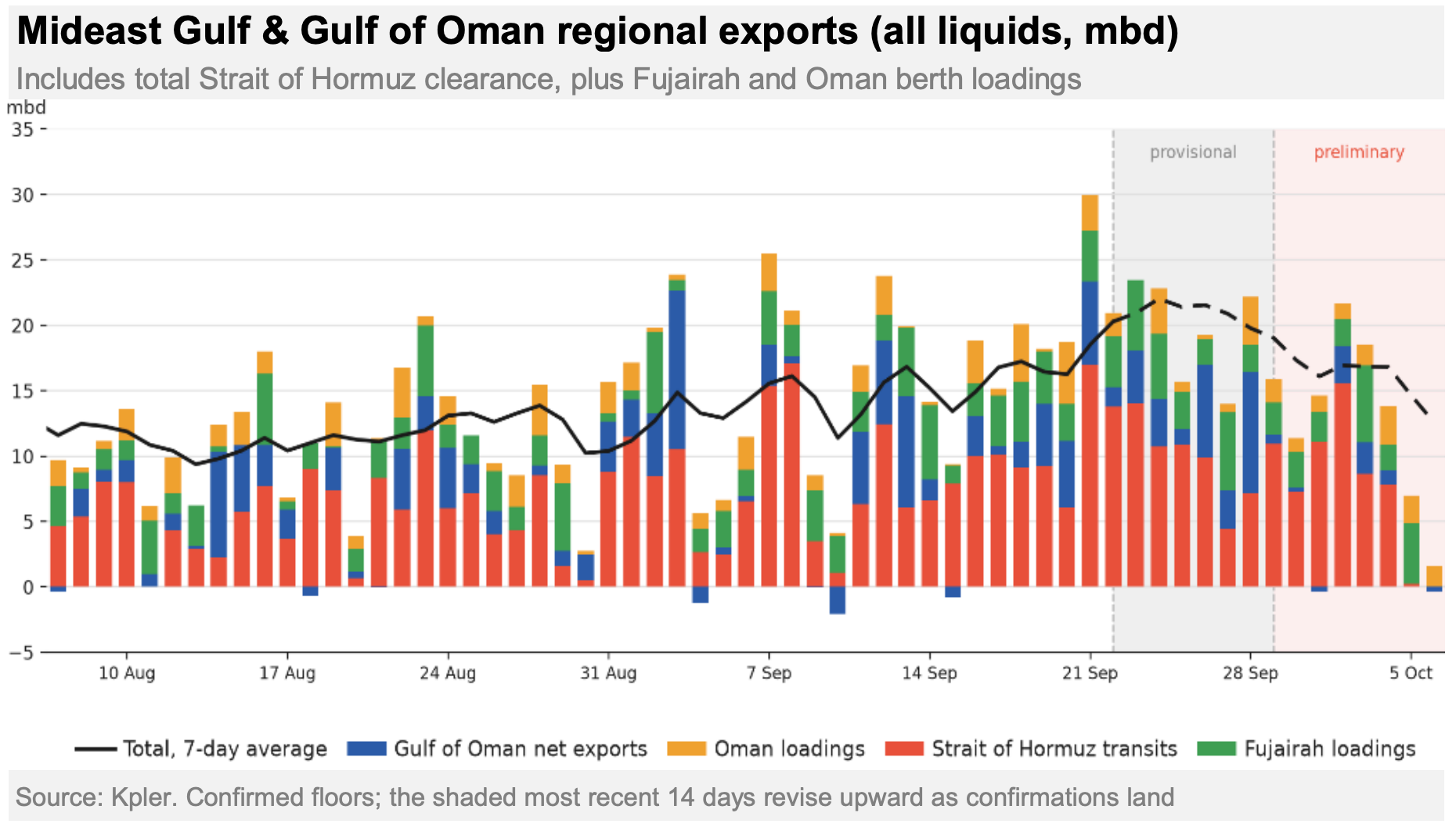
Ship-to-ship transfers are inherently inefficient. Not only are the flows we saw in late September completely unsustainable, but now that the deluge of tankers has loaded and exited, the next leg is down, not up. Funnily enough, this came just as a swath of writers ran over one another about how Iran lost control and that the Trump administration should continue its current strategy.
Clarity in thinking is nonexistent these days.
If people took a second to think about the ramifications, they wouldn’t be writing what they are writing. But then again, we have seen them in waves since the beginning of this war. Some people have faked it so far, but they won’t be faking it any longer.
Oil Math
The good news is that now that we’ve seen what max capacity looks like for ship-to-ship, it is easy to figure out where it is headed if Iran opts to stick to the status quo strategy of attacking tankers transiting versus tankers in Fujairah.
At 14 million b/d, this is likely the most the Strait of Hormuz will ever flow, representing a 4 million b/d deficit from pre-war levels (including Fujairah). If the Saudis can use the East-to-West pipeline, the deficit drops to 2.5 million b/d.
From a production shut-in standpoint, this is where we stand in million b/d:
Saudi: 2
UAE: 0
Iraq: 0.7
Kuwait: 0.4
Qatar: 0.5
Iran: 0.7
Total shut-in: 4.3 million b/d
This lines up with the Strait of Hormuz implied flow and suggests that if we’ve already seen peak Hormuz, the situation is likely to worsen from here.
As I’ve detailed in my WCTW this week, global onshore ex-China/US crude oil storage is headed to operational minimums. If Oman Lane flows drop from ~14 million b/d to 8 or 9 million b/d, the oil deficit will effectively double, sending the entire petroleum complex higher.
Even at status quo, current flows are unsustainable, which means a minor escalation by Iran will send global oil inventories tumbling lower. And with the incoming coordinated global SPR release, the timeline for operational minimums remains around the end of November to the beginning of December.
The US, as always, will be the last place to hit minimums as exports are currently constrained by elevated freight rates and domestic SPR releases (~38 million bbls).
Asymmetry
There are only three scenarios in the near term:
Status quo: maxed-out Hormuz flow due to ship-to-ship constraints, global oil inventories continue to fall, and we hit operational minimums (late Q4 2026).
Escalation: reduced Hormuz flow; global oil inventories hit operational minimums faster.
Complete resolution: unlikely given that Iran cannot control the Strait of Hormuz.
Despite Brent sitting at $100/bbl, this is still an asymmetric setup. Because of the tanker constraints and maxed out Hormuz flow, if the oil market already withstood what was a deluge of oil hitting the market, then there’s only one way to go: up.
In addition, from a technical setup, today was the day to break oil’s uptrend. The US released its last tranche of SPR and IEA said that it will discuss next week the coordination of releasing ~100 million bbls (50 million bbls in diesel and 50 million bbls in crude).
And even though the price action early in the day looked weak, we rallied back and finished strong.
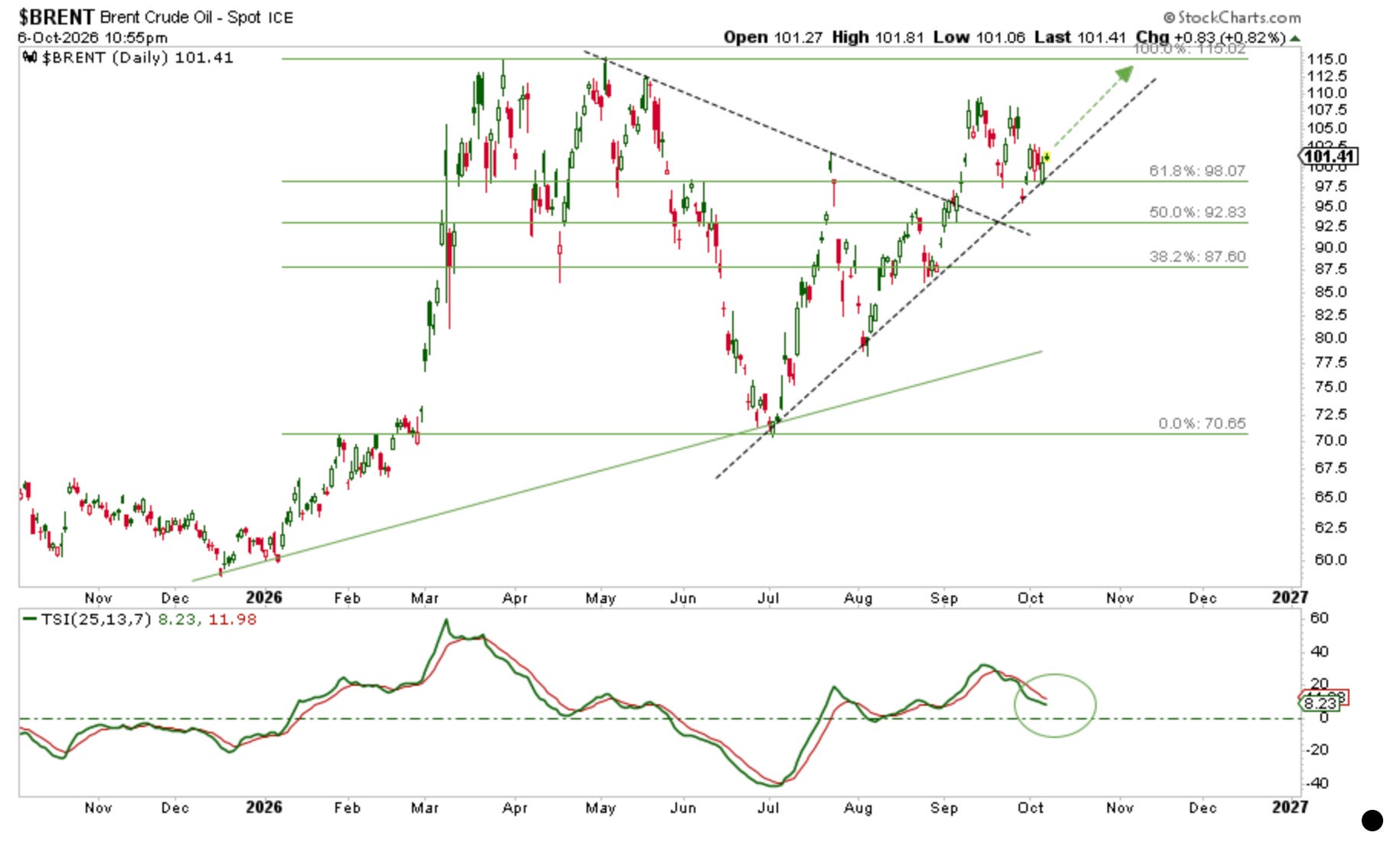
Brent hit the rising trendline and finished higher for the day. With all of the jawbone mechanics out of the way, maxed out Hormuz flow, and increase in escalation, I see oil prices going higher.
We have already seen what peak S-2-S Hormuz can deliver, and it’s not enough. The status quo is enough, but any additional escalation just accelerates the price-increase scenario.
Sit tight; we are going higher.
HFIR Oil Trading Portfolio
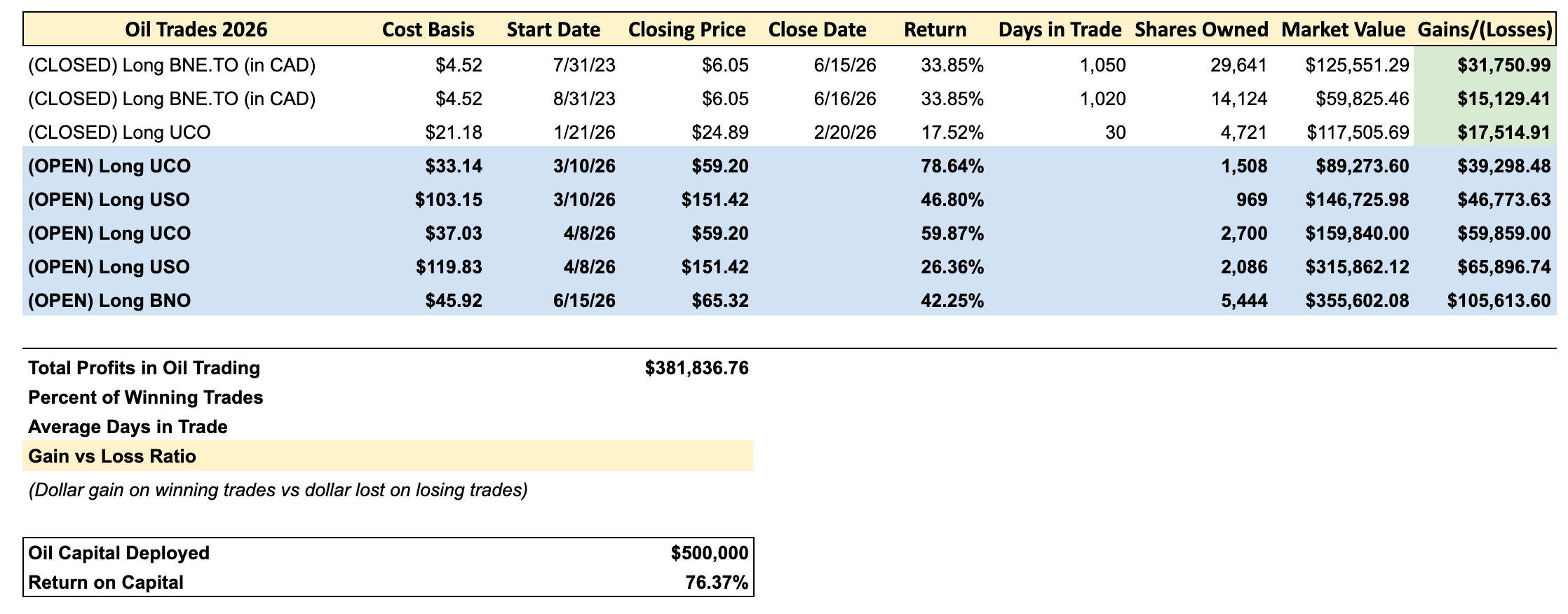
Analyst’s Disclosure: I/we have a beneficial long position in the shares of USO, UCO, BNO either through stock ownership, options, or other derivatives.