

Great, we lifted Iranian oil-in-transit for 30 days.

How much does this change the oil market?
Nothing.
Zero.
No change, whatsoever.
Every oil trader that doesn’t live under a rock knows this.
Iran has been exporting freely since the Biden administration turned a blind eye to Iranian crude exports in 2022.
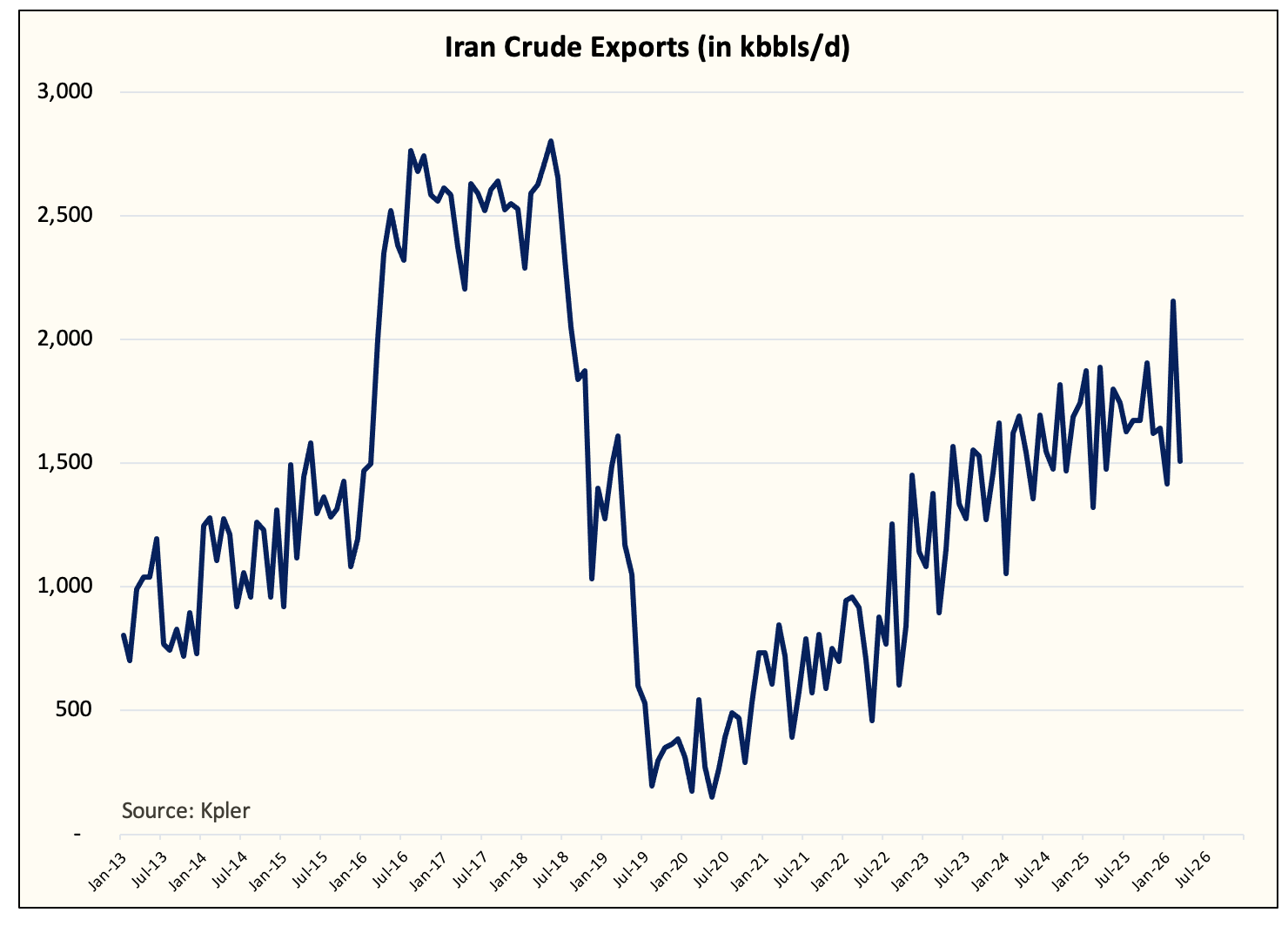
The chart above, based on Kpler data, does not include all shadow-fleet volumes. IEA estimated that Iran’s production is near 3.55 million b/d, or just 250k b/d below the 2018 highs.
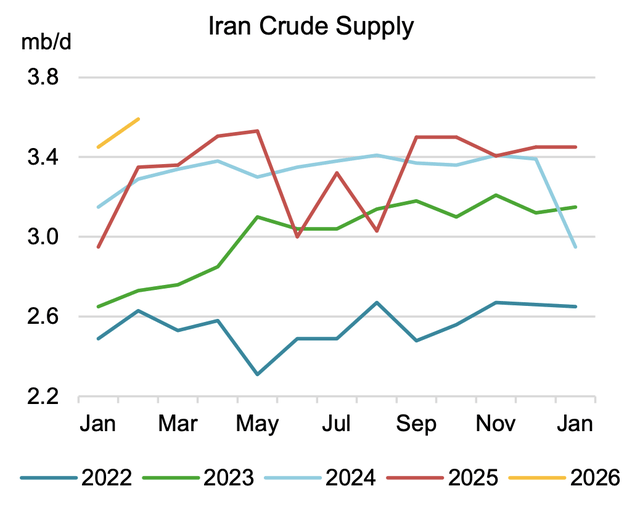
Source: IEA
By our estimate, Iran, including the shadow fleet, is exporting ~350k b/d more than the figures reported above. If so, Iran was exporting near max capacity prior to the conflict.
The temporary sanction lift allows others to buy the current oil-in-transit. The issue here is that the OFAC license still restricts the flow of money to Iran, so China remains the only logical buyer.
Following Trump’s sanctions in 2018, Iran adapted. After the crude is loaded at Kharg Island, various ship-to-ship transfers are conducted, with the final crude “originating” from Malaysia.
This chart from Giovani Staunovo is a great illustration of this:


P.S. Malaysia produces around ~570k b/d, most of it for internal use. It is physically impossible to export that volume to China.
Now that you know the general mechanics of this, you will quickly realize that the US sanctions lift just reduces the friction between the seller and the buyer. Malaysia won’t play a role in oil-in-transit anymore, and since the oil flow was already underway before the sanctions were imposed, the impact on the oil market is nil.
Analyst’s Disclosure: I/we have no stock, option or similar derivative position in any of the companies mentioned, and no plans to initiate any such positions within the next 72 hours.