

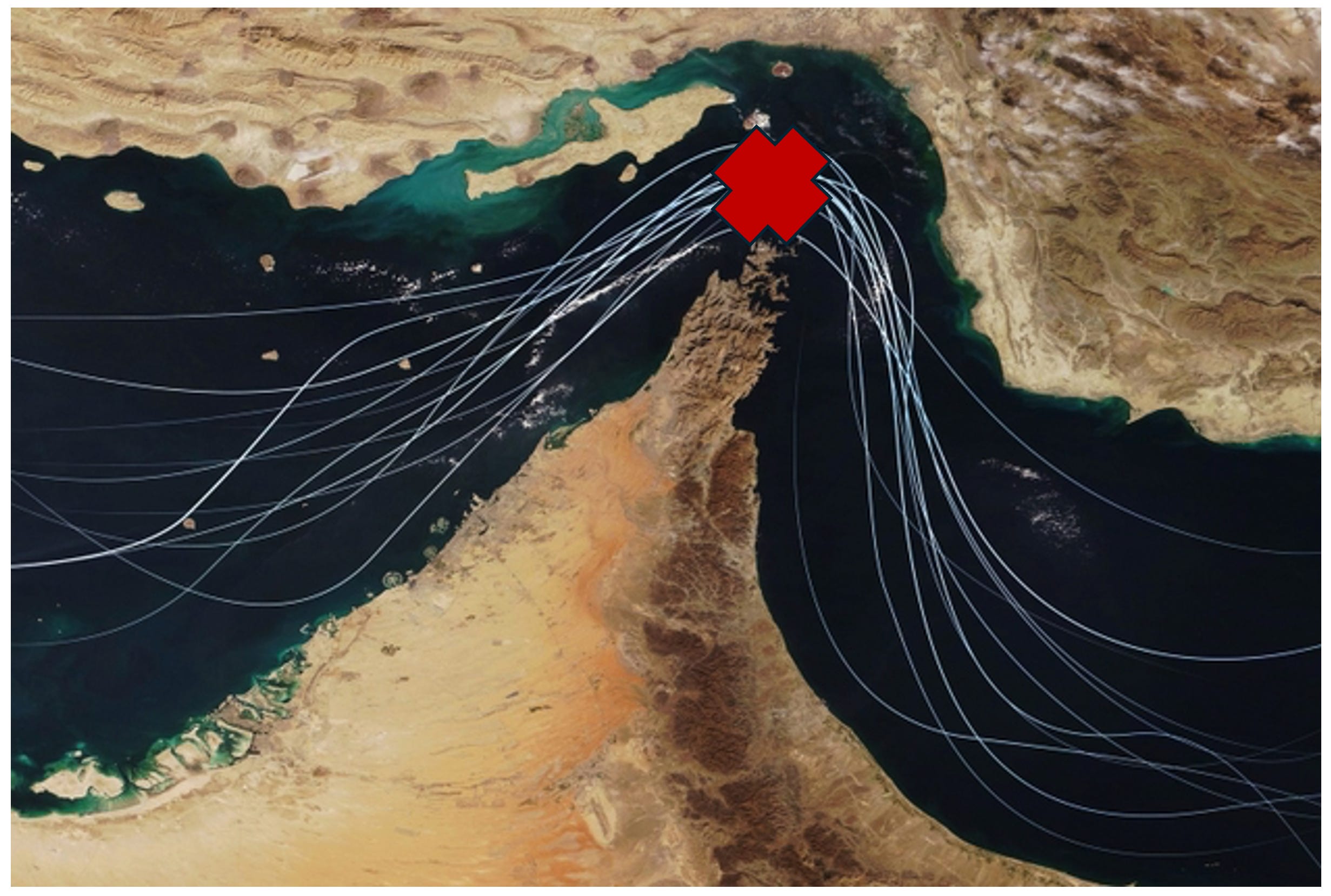
The market is incorrectly assuming that the Strait of Hormuz will return to normal. Since the beginning of the Iran conflict, I saw this geopolitical event as all or nothing. Either Iran comes out victorious and controls the Strait of Hormuz or the US succeeds in toppling the regime and restores the Strait of Hormuz back to normal.
There was no in-between.
Now that the MOU is signed, effectively giving Iran control of the Strait of Hormuz, we are never going back to the way it was. Unless, of course, the US tries to restart the conflict and comes out victorious, but outside of this scenario, Iran is now the most powerful oil producer in the world.
It has been a week since the MOU was signed and the latest tanker traffic data is becoming obvious. Following the conflict in Lebanon over the weekend, IRGC announced that it stopped issuing permits and the current tanker activity exiting the Strait of Hormuz is related to existing permit holders.
Over the coming days, this will become obvious. But what should be even more glaringly obvious right now is the tankers coming into the Strait of Hormuz.
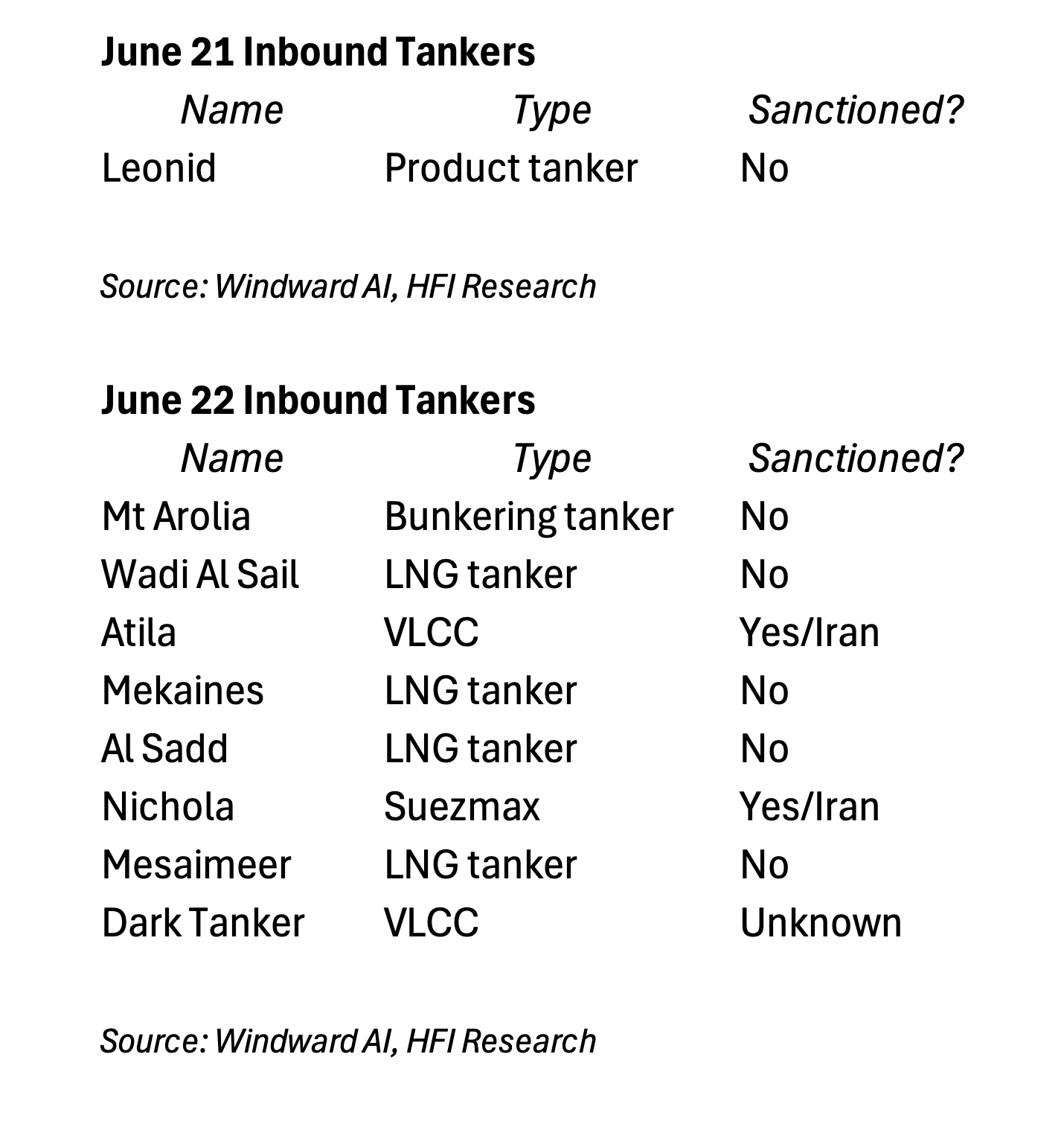
Since the announcement of the closure over the weekend, these are the tanker inflows for the last two days:
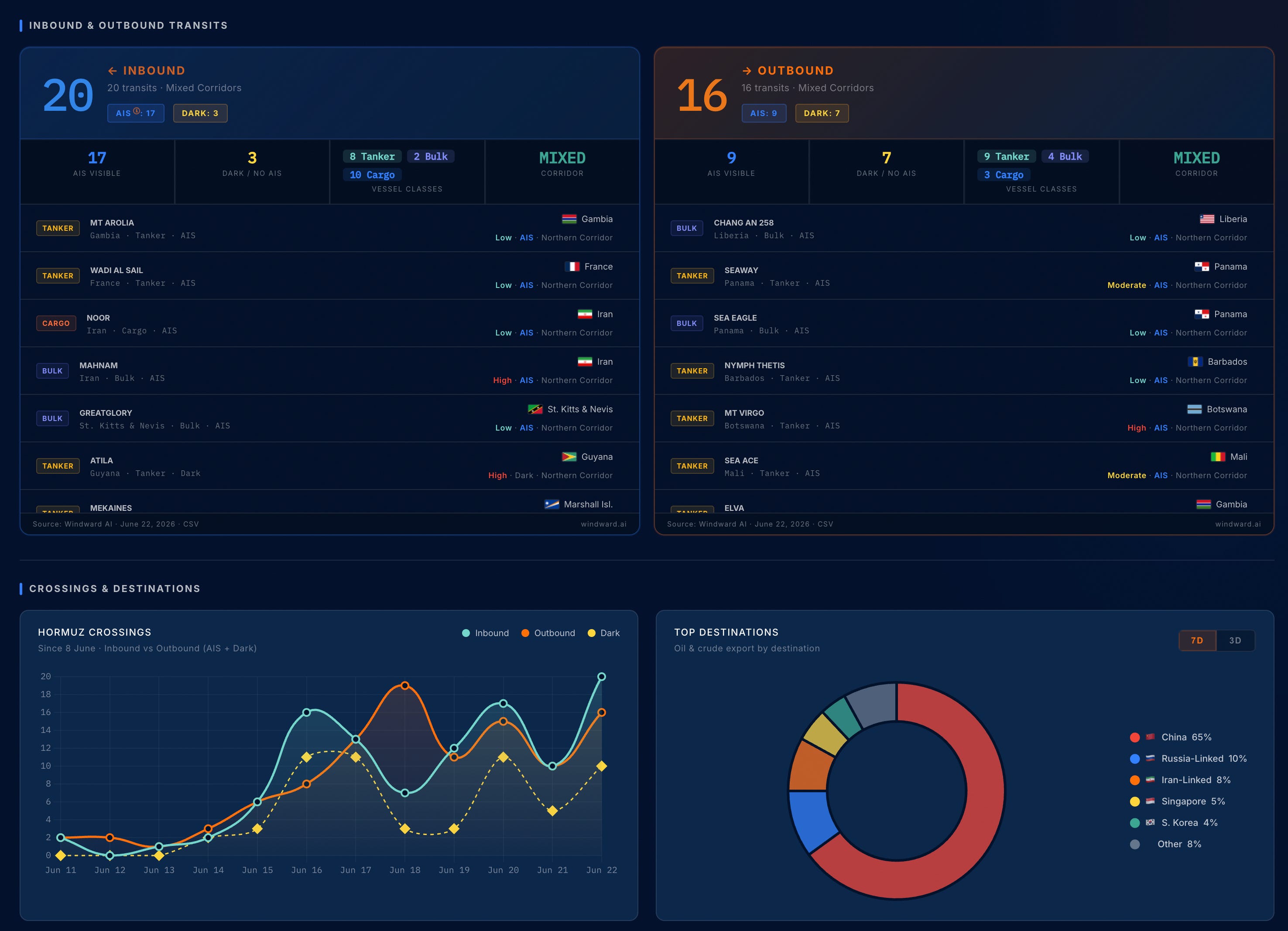
From a total vessel count, most analysts are looking at the bigger headline figures:
Source: Windward AI
But for the relevance of the oil market, production shut-in, we need to see sizable volumes of VLCCs going back into the Strait of Hormuz to change the math. At this moment, that is not happening.
Going forward, I will be publishing daily tanker counts, just like the table above, distinguishing between sanctioned and unsanctioned tankers and their types. That way, readers can see the emerging pattern, which is becoming obvious to me.
IRGC controls the Strait of Hormuz, and the inflow of crude-related tankers right now is dominantly going to Iran, with some leakage here and there for the others.
In my view, anyone assuming the Strait of Hormuz will return to normal is making a serious analytical mistake. This is especially true given the data that’s surfacing right now.