

“Everyone, run for the hills; the oil market is back in surplus.”
The story is writing itself. Oil prices fall, the physical crude oil market enters a temporary period of abundance, and the market immediately shifts to: the oil market is in surplus.
It’s DéJà Vu all over again. The market continues to discount the geopolitical backdrop with global oil inventory buffers at an all-time low.
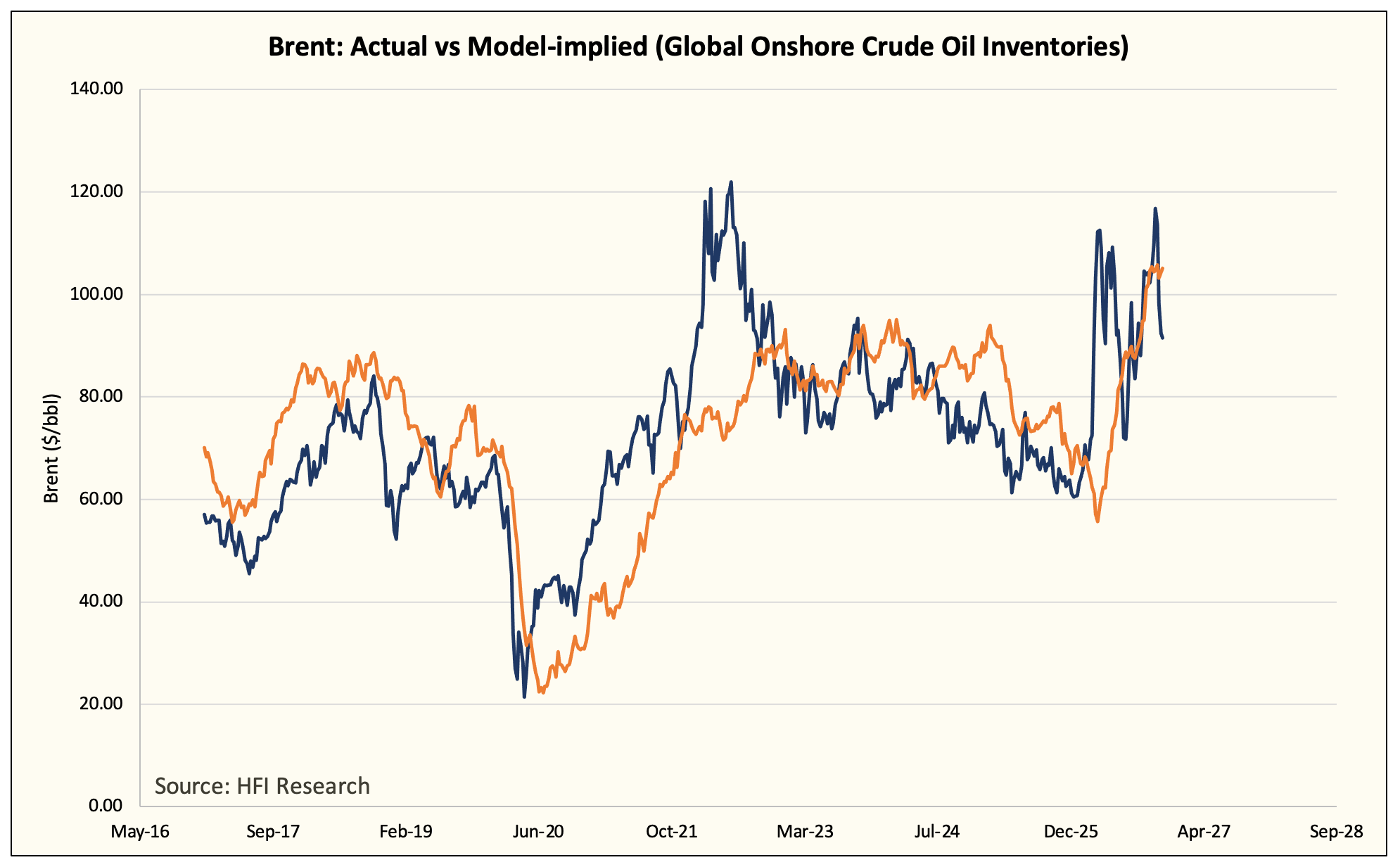
So I won’t waste your time and I’ll get straight to the point: Brent is undervalued relative to where we are on oil inventories.
Let me explain:
Oil prices always oscillate around oil inventories.
This is common sense.
Oil is like toilet paper for the global economy. You always want a lot of it lying around. When the crude oil futures curve is in backwardation (prices are higher today than tomorrow), it increases the cost of storing the oil (who wants to sell at a lower price tomorrow), so this reduces available crude oil for use.
The lower the crude oil in storage, the more urgent it is to “buy” when you see a path to shortage. This is then reflected in physical premiums, which financial commentators are eager to point out. But then we have periods in time, especially when refineries undergo maintenance, the crude oil market can go into a temporary period of weakness.
Take, for instance, the crude oil market today: Saudi, UAE, Iraq, and Kuwait are hell-bent on getting their oil out of the Strait of Hormuz. To incentivize traders to buy their oil, they discount the barrels by an obscene amount ($7 to $11/bbl). On a VLCC, that’s $14 to $22 million. So yes, the financial incentives write themselves. This urge to sell massive amounts of crude oil would then run into the issue of competing with crude oil already available in the market. If you are an oil trader with access to cheap Persian Gulf oil, you will try to get the discounts. Who can blame them?
So they make a bid, pray their tanker make it through the barrage of Iranian missiles, and they can make their happy profit. But from time to time, and as we’ve seen in the past 10 days, Iran has materially increased escalation, which has put pressure on the flow out of the Strait of Hormuz. This has, in turn, drained available oil elsewhere as traders that did not get their shipment buy up whatever else is available. China, for instance, has been clearing South American loadings, and now that simple margins are positive again for crude from the Middle East, they are swooping those up as well.
The point is that the things that are leading indicators like tanker escalation, implied flows in the Strait of Hormuz, and current oil inventories are what ultimately matters for where crude oil is headed.
We went through this episode in July when the oil market was inundated with 150 million bbls of floating storage, higher visible SOH flows, and a large discount in crude oil relative to the inventory-implied price.
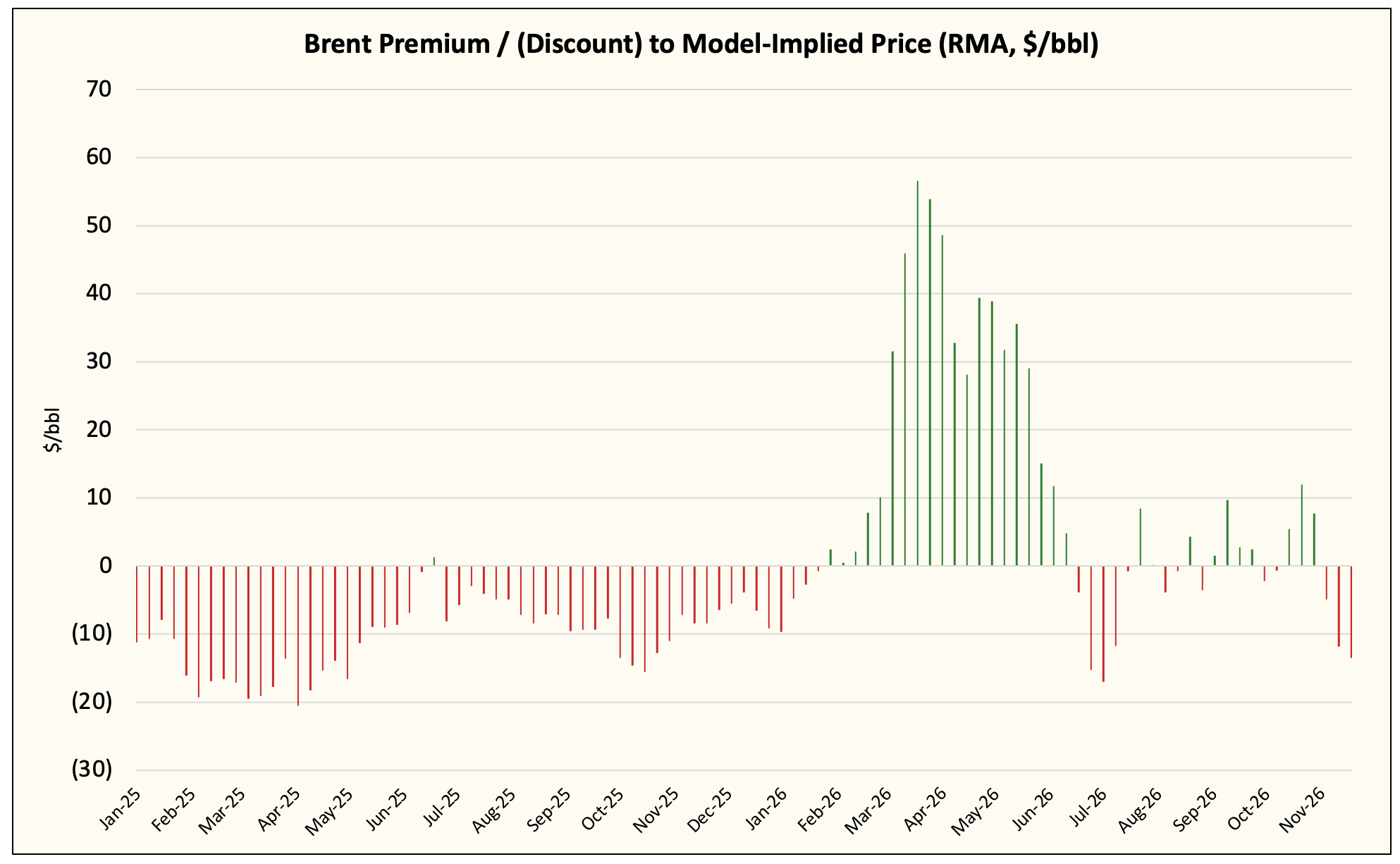
Now what you will notice in the chart above is that throughout 2025, crude oil was undervalued relative to inventories.
Why?
For starter, market assumption was that the oil market was in surplus. Global visible oil inventories were building, and although the build was not as fast as the consensus expected, the expectation of builds prevented traders from getting bullish.
Logical and understandable.
Today? Not logical at all.