


The energy community has been so focused on the conflict in the Strait of Hormuz that everyone is missing a bigger theme unfolding: the end of non-OPEC supply growth.
Yes, some of us energy specialists have been talking about this forever, but it’s quietly unfolding in the background. Now, add the fact that the Strait of Hormuz issue remains unresolved, and you’ll quickly realize there are no short-term supply valves coming to the market’s rescue, which makes how this war unfolds even more important.
But before I begin, let’s clear up a few things:
The oil market is currently in a deficit of 3-4 million b/d (Oman Lane flow of 8 million b/d).
Middle East oil production shut-in remains around ~4 to ~5 million b/d. Most of that is in Saudi Arabia and Iran (2.5 million b/d and 1.8 million b/d).
How the Strait of Hormuz issue is resolved will determine the oil market balance: Iran wins = the oil market remains tight. US wins = oil market getting loose.
Over the coming years, US shale, Canada, and Brazil have peaked. Non-OPEC supply growth is contingent on Argentina, Guyana, and Colombia. Existing decline from aged production fields will offset the growth from these fringe growth countries (0.4 million b/d).
For OPEC+, Venezuela production growth is offset by production decline in Russia.
The Signs Are There
At HFIR, we track US crude oil production in real time. We’ve been doing this since 2018, and the backstory is that my P&L was materially destroyed when US shale growth surprised to the upside (in 2018). You can say that I learned this lesson the hard way. Ever since then, we might be one of the few shops that track this figure religiously. Call it PTSD, if you will.
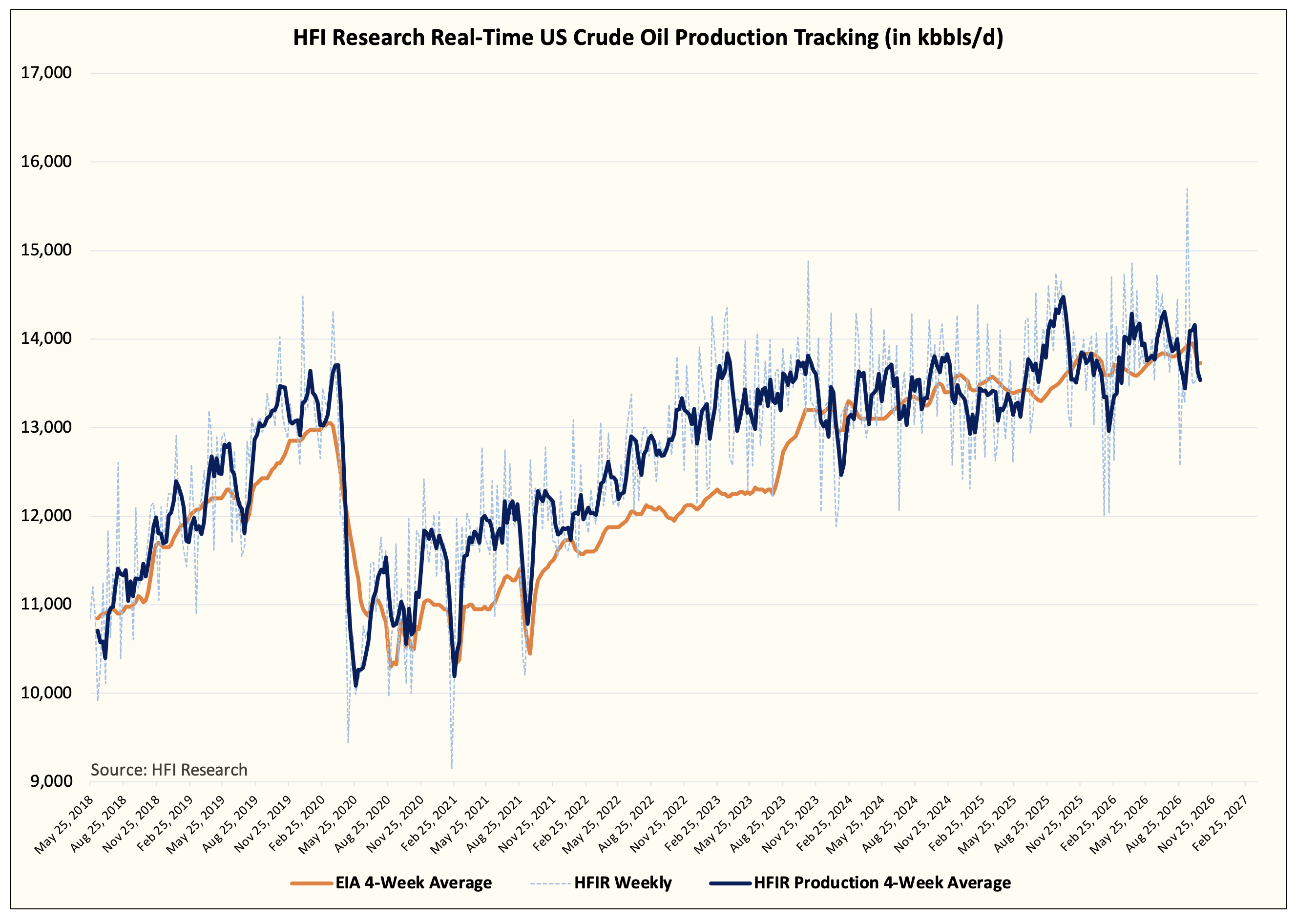
Using our real-time production tracker, you can see the nonexistent growth in US shale. In fact, if you are daring enough to say this, you can look at the data point in 2019 and come to the same conclusion. We have effectively reached a plateau between 13 and 14 million b/d. EIA’s 2019 data did not capture all US production; our data did.
This is what a plateau looks like.
To make matters worse, we know this is the peak for US shale because associated gas production has diverged materially from crude oil production.
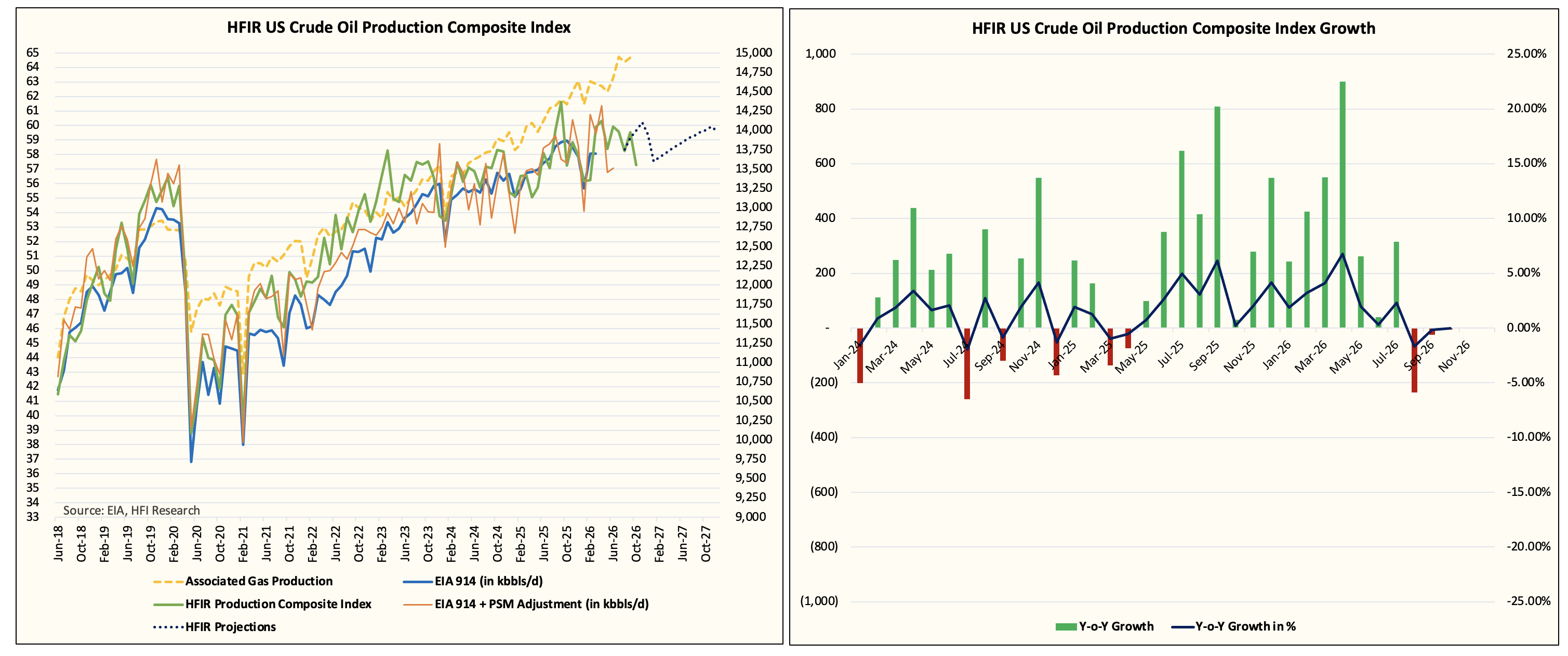
Sure, US shale could add 0.3 or 0.4 million b/d next year, but that’s it. Most producers had 2 quarters this year to meaningfully ramp up in a favorable oil-price environment, and guess what: nothing happened. All we saw was higher associated gas production. That’s not a sign of growth.
In fact, if you want to be funny about this and since President Trump is asking Putin for help, you can say that the fall in Russian crude oil production has more than offset any growth in US shale.
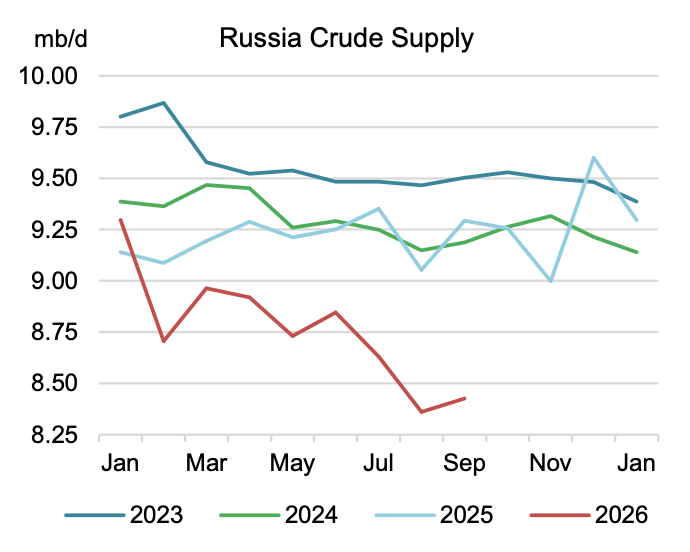
Source: IEA
So much for drill baby drill? Yeah, it was never real to begin with. But then again, anyone in the oil business knew from the start it wasn’t realistic.
The troubling thing about the non-OPEC supply growth picture is that some of the heavyweights that propelled non-OPEC supply growth higher in the last decade are all going to plateau.