

The US announced last Tuesday that it would release the final ~40 million bbl tranche of the SPR (172 million bbls total). And on Friday, following threats of a diesel export ban from the US, France’s Macron stated that it is considering ~50 million bbls of diesel from the SPR and asking IEA members to release another ~50 million bbls of crude.
Politicians will always be politicians. Instead of realizing that the Strait of Hormuz issue + incoming global oil shortage won’t be resolved even after the SPR release, they are opting to buy time. Time the world doesn’t have, no matter how sizable the SPR is.
It’s like throwing bottles of water at a burning house. It’s not really going to do anything unless you solve the underlying issue.
The dilemma the world faces today is that the hefty inventory surplus has now turned into a deficit. China, which held a large crude oil surplus, is now buying crude. The world no longer benefits from the 4 to 5 million b/d reduction in Chinese crude imports. What was once seen as a headwind for the crude oil market is now turning into a tailwind. And despite many analysts pointing to higher Strait of Hormuz oil flows, the return of Chinese crude buying is the same black-box fundamental variable as the lack of buying.
If China buys the crude, which caused the Strait of Hormuz flow to increase, it has no relevance to the rest of the world. China is its own variable, black-box-in, black-box-out.
But last week’s attempt at pushing oil prices lower couldn’t have been more obvious. As I have detailed throughout my oil game plan articles, the Trump administration was going to do everything in its power to push oil prices lower just ahead of the midterm elections. But it is too little, too late.
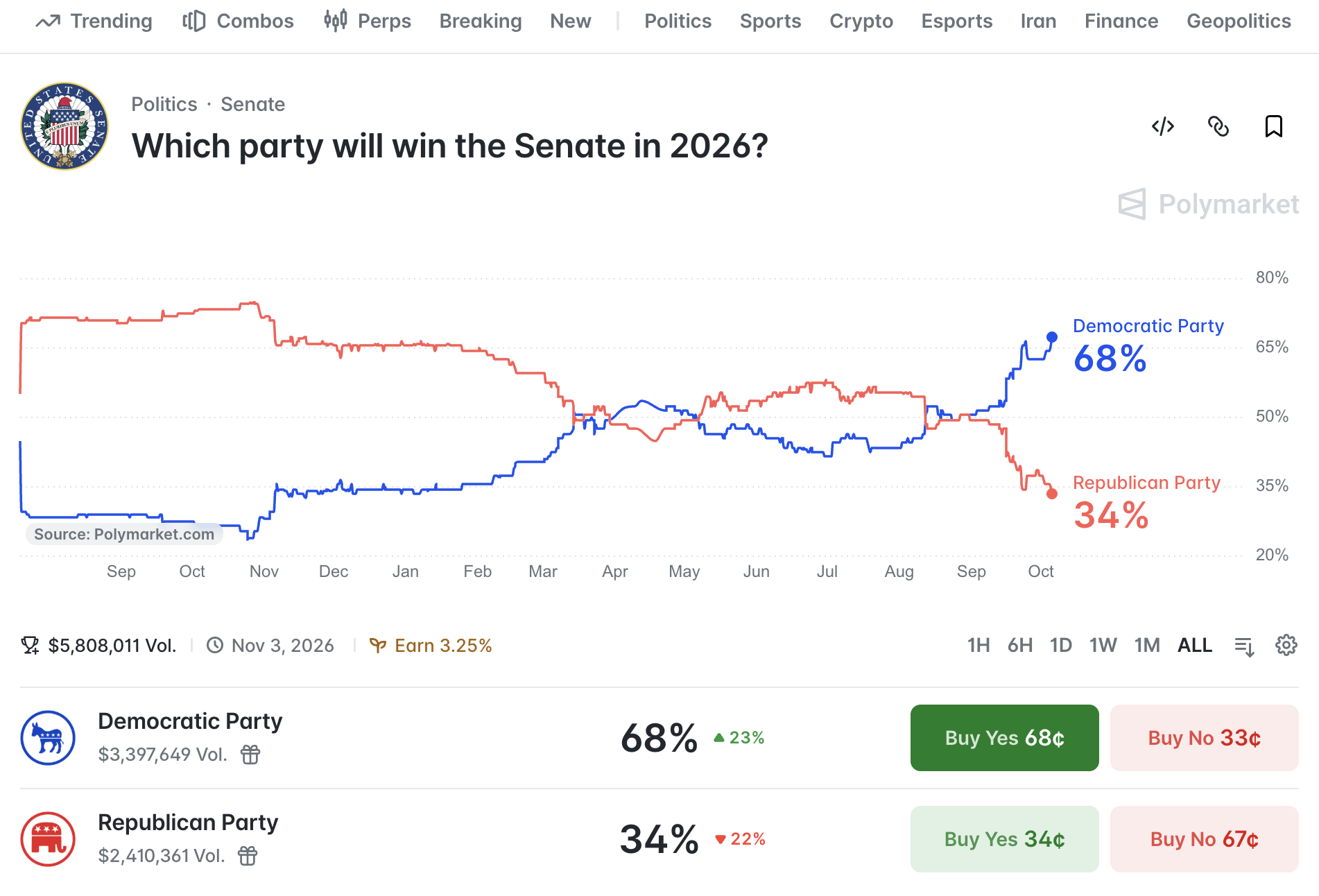
Polymarket has the Democrats winning the Senate at 68%.
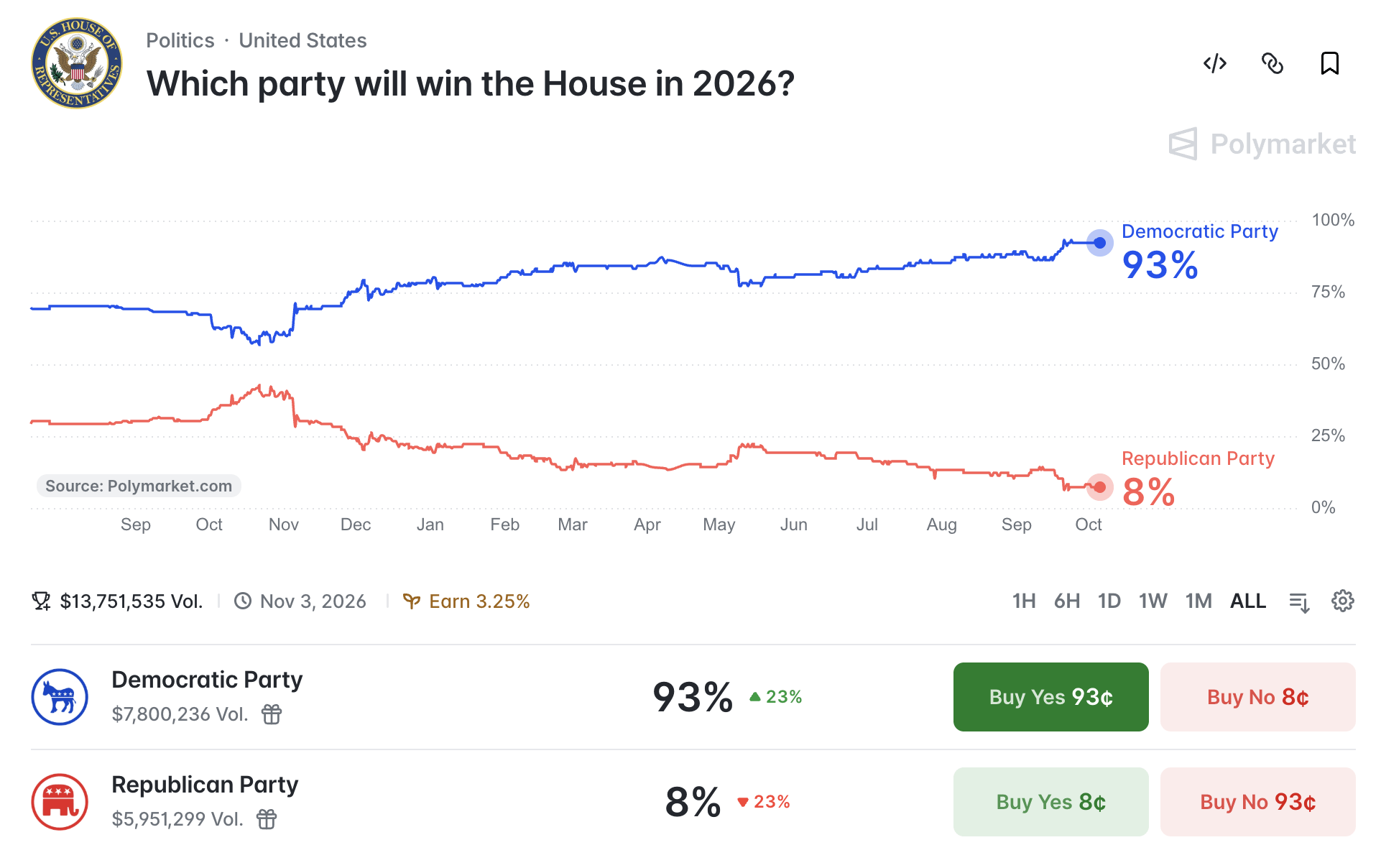
And the House at 93%.
With global refineries now entering turnaround season and China banning product exports, diesel and gasoline prices are going higher along with crude. Even in the face of the incoming SPR releases, traders won’t care. With the underlying market still in a steep deficit, each passing day just drains inventories further, and we get closer to the wall.