


A battle of attrition, that’s the game both the US and Iran are playing right now. What we are seeing in the oil market is a double countdown: the US, with its naval escorts, has managed to keep the world from running into oil shortages, but for the Iranians, the naval blockade is running down a critical clock.
For the upcoming winter, Iran will have the following shortages:
Natural Gas: Critical
Electricity: Critical
Foreign Currency: Critical
Industrial Energy Supply: Critical
Gasoline: High
Diesel and Heating Fuels: High
Medicines: High
Livestock Feed: High
Based on the analysis I’ve seen, we won’t see many food shortages, but the economic pressure is building. By mid-December, Iranian oil sales that started in late June will run out. Aside from the toll payments that whatever ship-to-ship operator is already paying Iran, the main source of financial revenue is running out.
And for the US, global ex-US/China crude oil inventory is just half a step away from reaching critical levels.
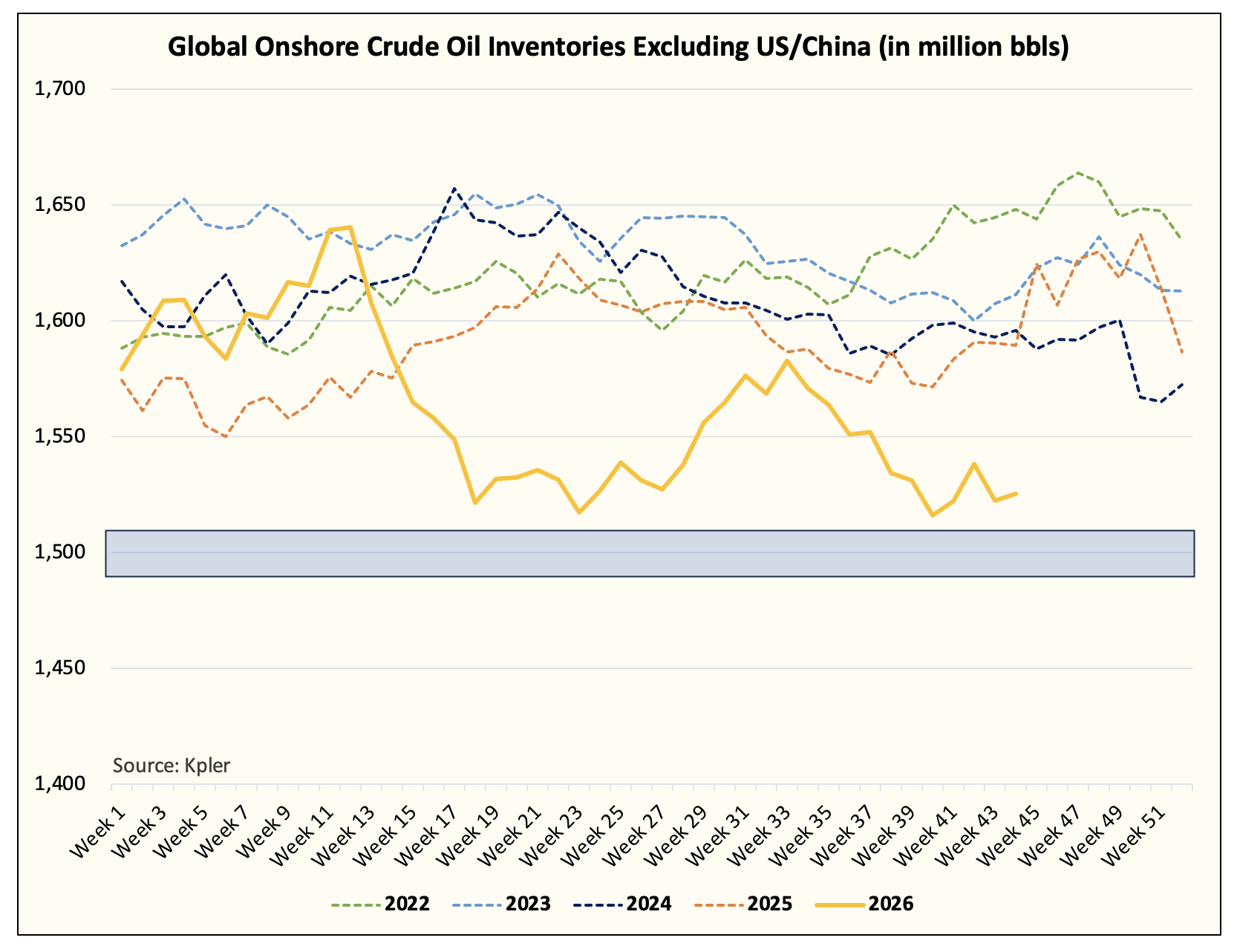
The shift from prioritizing crude oil tankers to product tankers in early October marked the peak in refining margins, but the product shortage persists. I am already seeing signs that refining margins are bottoming and will start to move higher again.
And for both sides, a colder-than-normal winter would bring chaos, but Super El Niño tends to foreshadow a warmer-than-normal winter, so Mother Nature may indirectly prolong this war longer than anyone likes.
From the oil market’s point of view, Iran is currently losing the war. WTI is back below $80/bbl; Brent is trading at $89/bbl. Strait of Hormuz flow moved lower, but continues to hum along as if the advertised tanker attacks are being overstated.
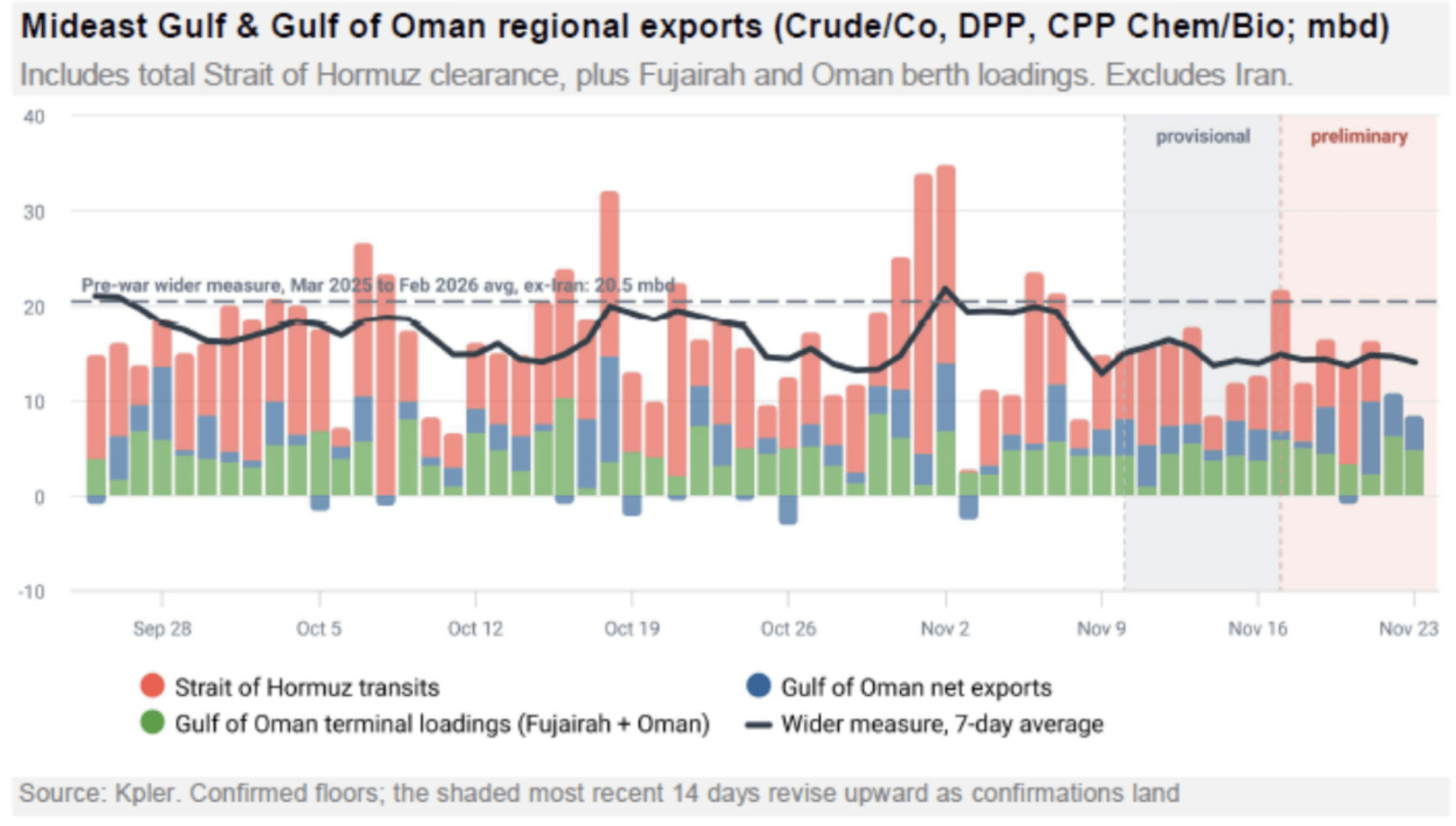
Source: Kpler
Iran’s recent bout of escalations has moved total flows lower by ~3 million b/d, but the physical crude oil market remains bloated, which has led some oil analysts to question the authenticity of the data. Are flows really moving lower?
Yes, they have, but total loading volumes aren’t cliff-diving like we thought they would.
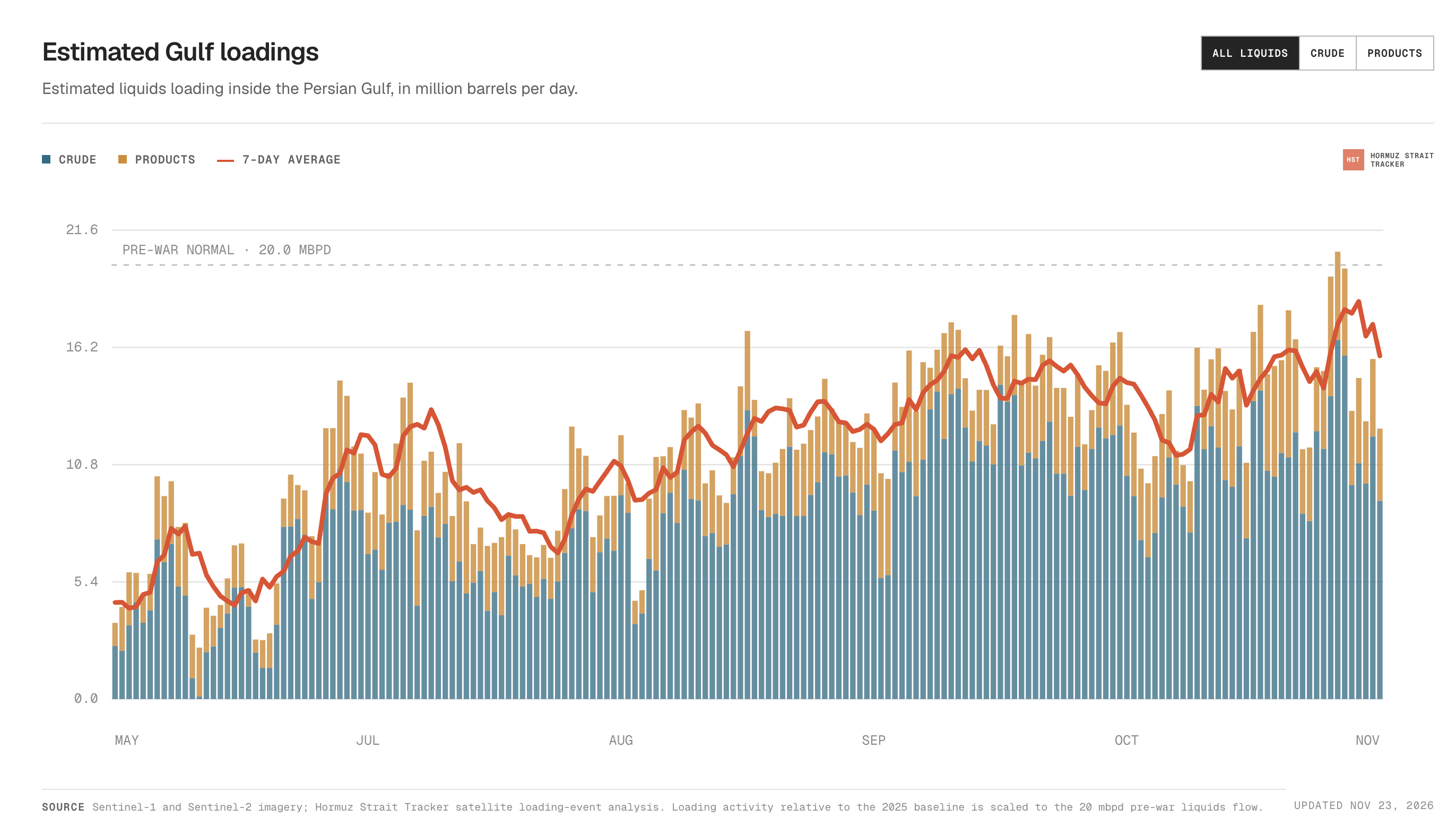
Source: HormuzStraitTracker.com
Some analysts on X urged readers to focus on loading data versus transit data. The assumption here is that whatever gets loaded will either get hit or make it out alive. That’s the correct assumption, and talking to people involved in the oil shuttle trade, they have informed me that the daily attacks are being overstated. It is closer to 1 to 2 ships a day, and sometimes they are not VLCCs, but Suezmax or product tankers.
As a result, the impact of the attacks, while still significant and important in the long run, is closer to 2 to 3 million b/d.
This lines up with the drop in estimated flow from Kpler.