

We have three high conviction views on the oil market today. These are:
If the Strait of Hormuz does not return to normal, oil demand destruction via materially higher prices will rebalance the market.
If the Strait of Hormuz returns to normal this very second, production shut-in (~11 million b/d) will not return to normal until the end of June at the earliest.
If Iran imposes a toll fee arrangement, Saudi Arabia and the UAE will continue to bypass crude exports via the East-to-West and Abu Dhabi pipeline. This will keep ~4.7 million b/d offline. Here’s our explanation for why.
In our public write-up published on Tuesday titled, “The US And Iran Ceasefire And What It Does To The Oil Market.” We explained in detail the math behind our conviction point #2 above. The market’s problem going forward is that, with each passing day, there’s no complete resolution to the Strait of Hormuz or the production shut-in, onshore storage is falling.
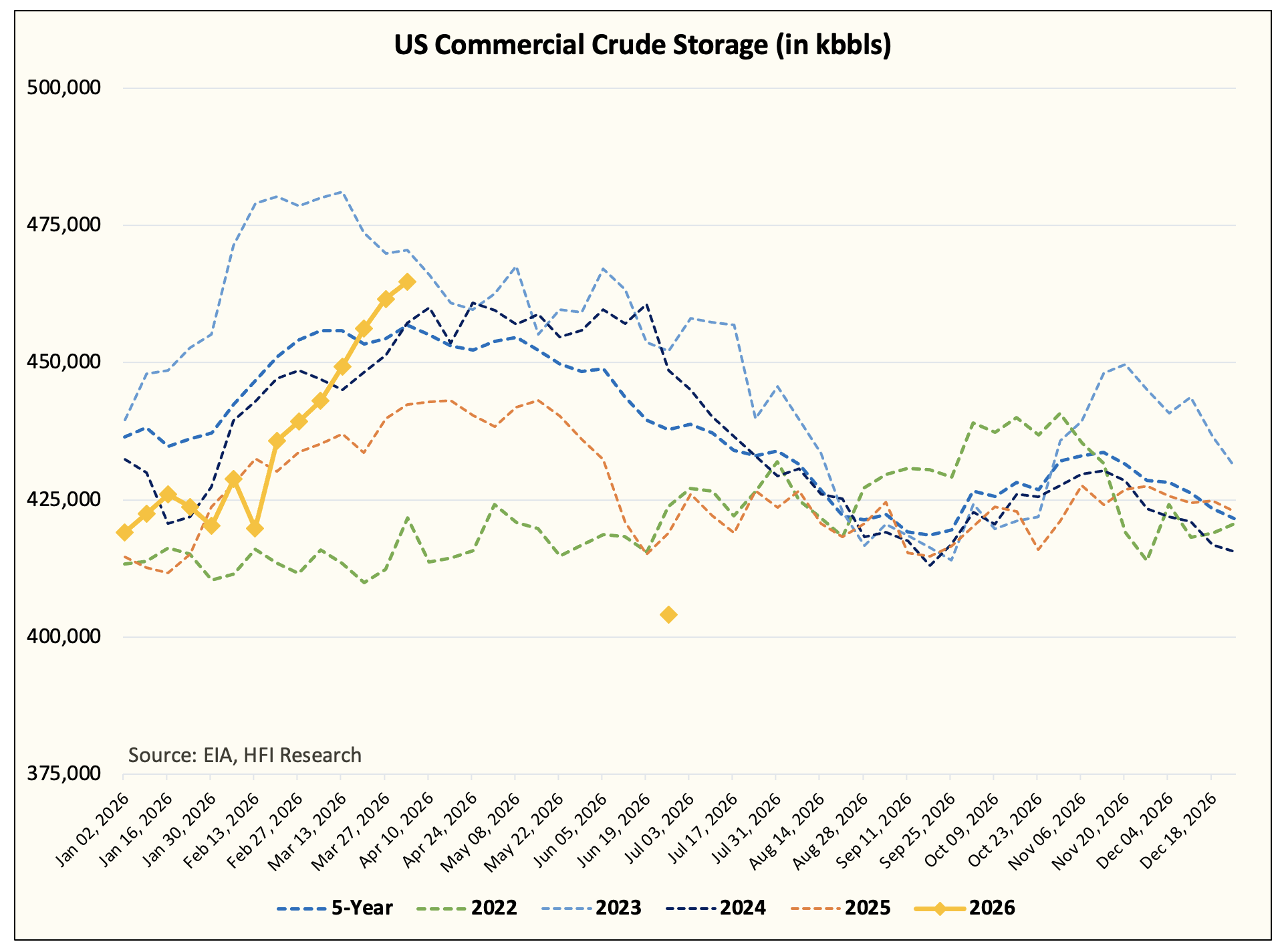
Using the latest tanker-tracking data, this is our updated estimate of US commercial crude storage by the end of June.
Tanker activity shows that US crude exports are about to explode past ~5 million b/d. This explains, in part, why Brent-WTI spreads have started to meaningfully collapse.
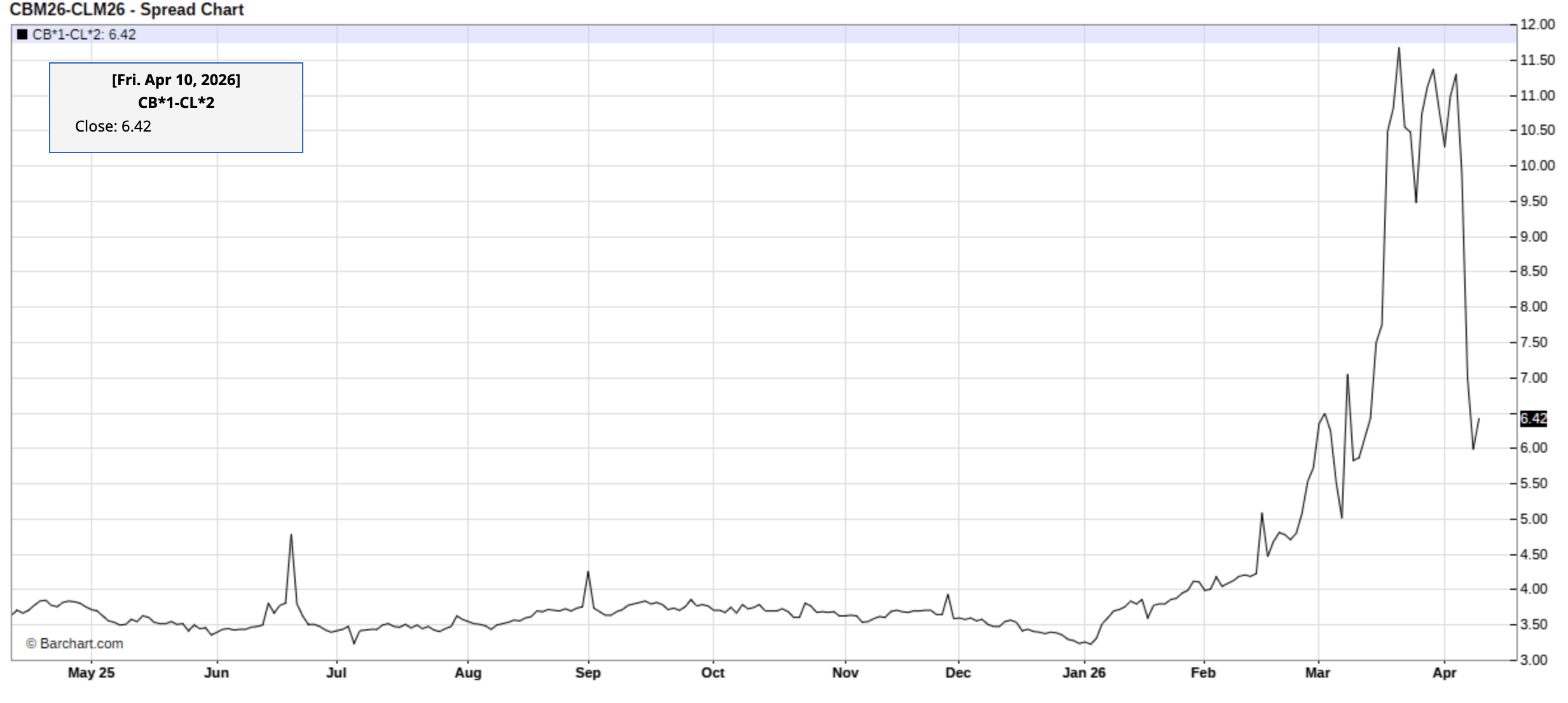
Once US commercial crude storage falls close to ~400 million bbls, Cushing will have reached close to operational minimum. This is when we will see WTI timespreads explode. We are already seeing Brent physical prices gap $30+ higher, and it’s only a matter of time before financial markets catch up to the physical reality. There won’t be any market manipulation attempts there when we run out of the onshore inventory cushion.
All of this leads us to believe that the only way the market can effectively balance everything is via demand destruction. So what are the signals?
Signals
Refining Margins
The first and most obvious signal for demand destruction will be when global refining margins turn negative. We all know that the majority of the supply outage today is in crude. There are ~11 to ~13 million b/d of production shut-in that won’t return anytime soon (logistical timing). To grasp the intensity of the supply outage, just imagine that during the height of the pandemic lockdown, global oil demand fell by ~10 to ~15 million b/d.
In other words, if the global economy returns to COVID-style lockdowns, you “might” be able to balance the current supply outage.
To get a sense of how all of this will unfold, we just have to use historical examples to grasp the timing and nuances of events.
Let’s use COVID as an example. Here is the sequence of events:
Lockdown imposed.
Staying home mandated.
Product inventories build.
Refineries cut throughput.
Crude inventory builds.
Floating storage builds.
Prices drop below the operating breakeven.
Production shut-in.
Those were the initial steps; the rebalancing looked like this:
Lockdowns ease.
Mobility indices increase.
Product inventories decrease.
Refining margins rebound.
Refinery throughput increase.
Crude inventory stops building.
Floating storage starts to decline.
Prices recover back above the operating breakeven.
Production shut-in gradually returns.
Now that you understand the logic chain, here is what’s happening today.